Champions of the Flyway!

Thursday, January 10, 2019

Review of the Year 2018 - part five

Crested Tit, Abernethy forest
 
After an entertaining autumn on the Yorkshire coast (which still had a very sweet sting in the tail - more of which below), the last two months of the year were happily bird- and adventure-filled, beginning with a lovely week in the Highlands of Scotland with the Mrs.

Woodcock, Abernethy
 
Disney princess
 

Fortunately for us, we were invited by the fine people at the Grant Arms Hotel - a beautiful, wildlife-focused hotel in the picturesque Highland small-town of Grantown-on-Spey - for a week in early November, which included delivering several talks and excursions for guests and visitors.

It's a fair way from Filey, and so we took the opportunity to drop in on the Woodhead clan on the way up for an evening and morning in Haddington - timed to enjoy a mother of a firework display in their hometown after dark and then an enjoyable session at nearby Musselbrough in the morning before heading further north.

With the recent American White-winged Scoter having gone awol a couple of weeks previously (despite reports to the contrary via the bird news services), hopes of a five Scoter trip were unfortunately off the table - but four would be something, if the other three species there played nicely and the Black Scoter would be good enough to stick around (and present itself) off Northumberland on the return journey the following weekend...

Short-eared Owl over the seawall at Musselburgh
 

... and with a lot of seaducks, as well as plenty of grebes, divers and other activity to enjoy out on the water, it wasn't long before we'd found the male Surfy, a few Commons and were carefully grilling the mobile flocks of Velvets for the American absentee.


Despite the lack of the latter, it was a treat to bird here (especially with the irrepressible and sunshiney Woodheads) - no wonder it gets so many good birds.


A few hours of increasingly stunning scenery through the windscreen later and we arrived at the Grant Arms Hotel - a great place to stay in every respect. Geographically, its position for seeking a wide variety of seriously quality birding and wildlife experiences is second to none, being ideally and centrally placed for all the local specialities;


- the staff, and especially the folks behind the BWWC (who run and organise all the indoor and outdoor activities there) are wonderful, with Sue, Simon and John just about the friendliest and most skilled team you could assemble up there; and the hotel and its birder-heavy facilities - including excursions, tours, talks, a library, morning info-meets and more - a model of the standards eco-tourism can achieve in the right hands.

Red Squirrel, Highlands
 
Our week was a relaxed, un-rushed affair that incorporated visits to stone circles, whisky distilleries and castles as well as wildlife-focused sessions, but it's fair to say we enjoyed plenty of what this unique area has to offer for nature lovers - Crested Tits, eagles, incredible Black Grouse leks and tons of seaducks, grebes and divers included. You can find more on this memorable trip here, here and here.

The incredible network of stone circles and cairns at Clava
 
Evenings were spent either sampling the seemingly endless selection of single malts at the hotel bar or giving talks, on my Champions of the Flyway and through-the-seasons birding experiences at Filey respectively - a real pleasure to deliver; happy to say we've been invited back next November, which we're already looking forward to. See here for more details.

Whooper whoopin' along the Northumbrian coast
 
On the way back home (after another drop-in with the lovely Woodheads and more quality birding at Musselbrough) we broke up the journey by overnighting in Berwick and spending the following day on the Northumbrian coast, with designs on the Black Scoter and then Lindisfarne.

Lindisfarne
 
We headed the short distance to Cheswick Sands on a beautifully crisp, clear morning, parked up by the dunes, and within a few minutes had had a noisy, low-flying flock of southbound Whoopers, followed soon after by a flock of bounding northbound passerines, which happily consisted of both Snow and Lapland Buntings – instant good fortune, which extended over the next hour, and indeed for a second session post-Lindisfarne later in the day.

Crappy screen-grab of a crappy Black Scoter digi-video
 
A couple of small flocks of Common Scoters bobbing offshore seemed statistically unlikely to include the drake Black Scoter, but there he was, and again even closer on the incoming tide later in the day, along with bonus Black Guillemot, grebes, divers and Eiders - a fitting end to a lovely, relaxing week in some of the UK's most beautiful landscapes. It's far from grim up north, trust me.

Black-throated Diver in the bay back at Filey
 
Back home and with a late autumn influx of swifts – some (many?) Pallid, some Common, others (most?) unidentified – underway, I was on red alert while birding locally, however slim the chances might have been. Amazingly, while out on the Brigg at Filey in the cold, wintry sunshine of the 13th, I glanced up and boom, there was what turned out pretty quickly to be a de facto Pallid Swift hawking high over the waves, which even hung around long enough for record shots before disappearing high over the North Sea.

You BEAUTY!
 
A particularly sweet sight after narrowly missing a bird here last year (while en route to Cape May – I know, talk about ungrateful), and my sixth self-found BBRC rarity here in less than seven years; sometimes it all comes good in the end.

Young Whooper at Filey Dams
 
From a migration perspective, autumn quietly turns into winter around mid-November here, although there are of course plenty of possibilities, particularly in the bay and off the Brigg, and a handful of Filey specialities – Long-tailed Ducks, Black-throated and multiple Great Northern Divers, Black Guillemot - filled in the gaps before the next winter getaway.

Stunner
 
A few days in Berlin staying with our dear friends Michael and Lydia in Kreuzberg were dedicated to various aspects of life somewhat lacking on the Yorkshire coast, including diverse culture-vulturing, great bars, festive Christmas markets and good food, and thus birding was hardly a priority - alhough I still managed to sneak in a productive session while we explored Teufelsberg in the west of the city:

Middle Spotted Woodpecker in Berlin
 
Despite dark and breezy conditions we had great views of a close-up hunting Goshawk, Middle Spotted Woodpecker, Hawfinch and caudatus Long-tailed Tits, always a real treat; more on these and other Berlin collateral here.

Firecrest - a pleasingly common bird in the Provencal winter landscape
 
Barely a week or so passed before we happily bolted again, this time for ten days or so in Provence (via London) over Christmas and New Year. Again, this was far from a birding trip, but having had the pleasure of staying with our great friends the Fontenoys there plenty of times over recent years, I knew there'd be opportunities to bust out the bins and camera.

Wallcreeper, Les Baux
 
It could hardly have been any better, with mainly sunny and mercifully (mostly) Mistral-free days including many a fun excursion, not least in pursuit of Wallcreeper and Alpine Accentor at Les Baux - more on these unforgettable encounters here and here.

Black Redstart, Provence
 
So not exactly a dull end to what, while writing these summaries, was clearly a very good year on many levels.... here's to an equally productive and inspiring 2019.

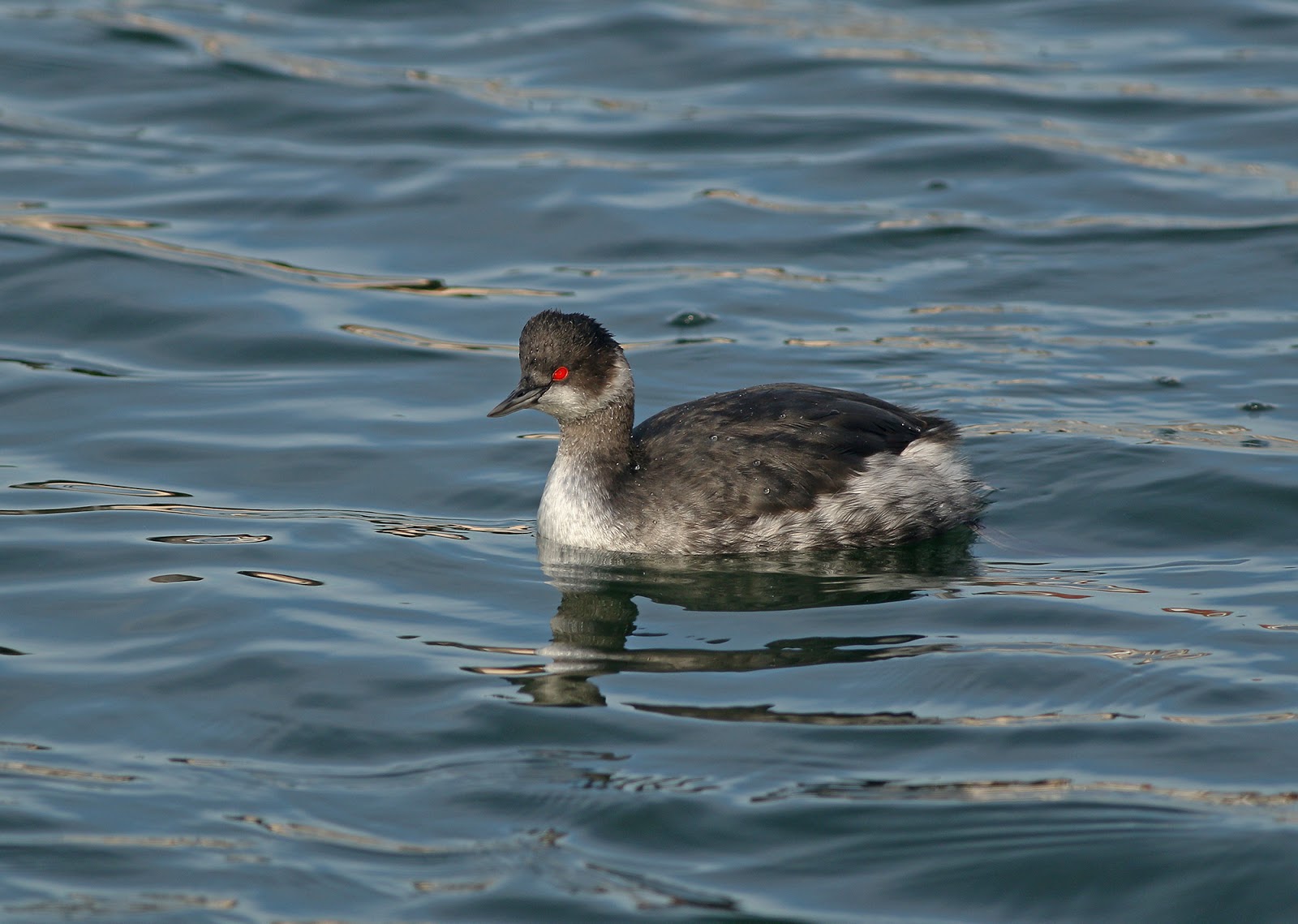
Black-necked Grebe, Martigues, Provence
 

Sunday, January 6, 2019

London Calling - talks this week!

So I'm back in London this week for a run of talks (see below) - all are open to everyone and all are welcome. For any questions you can contact me at nazemark-at-yahoo.com (replacing -at- with @) and hope to see you there! At the end of the month I'm in Lancashire and Wales - look out for more details here soon.

Saturday, January 5, 2019

Review of the Year 2018 - part four


From Nighthawks over the NY cabin to a Nightjar in a tiny suburban Filey garden.... 
 
After such a relaxing time in the picturesque outback of upstate New York, swimming in forest lakes, watching flocks of Nighthawks swirling over the treetops during dusk cook-outs on the porch, bumping into bears and porcupines and basking in warm sunshine, we grudgingly returned home in early September; it was at least a return timed just as activity was due to kick in back on the Yorkshire coast, however, and it turned out to be a highly enjoyable and productive migration season back home.

Purple Sandpipers were back in numbers, as usual, by mid-autumn on the Brigg...
 
... along with a variety of other waders, some of which were just passing through, like this Curlew Sandpiper
 
September was dominated by low pressure systems and a south-westerly airflow - in short, crappy for grounded drift migrants, crappy for sea-watching, and pretty much crappy for everything else - except visible migration, that is, and so that's what recieved the most attention. I've experimented with several vismig watchpoints locally in previous years, all with different strengths and weaknesses, but have pretty much settled on Reighton Sands (at the very southern point of the Filey recording area, on the border with Flamborough's).

A smart male Bullfinch migrating south at Reighton Sands. It was a strong season for visible migration, with much of the action peaking in September... 
 
..... but continuing in fits and starts throughout October (southbound coasting Yellowhammer pictured) 
 
A southbound Greenfinch sneaking through in a Siskin flock shortly after dawn at Reighton Sands
 
Activity peaked during the beginning of the third week of the month, and after a plea for help from Keith a little further north at Hunmanby Gap on the early morning of the 20th, I abandoned my spot (with waves of passerines heading over) and joined him for fantastically busy morning:

 
Vismig continued to be productive, but even in generally discouraging conditions, there are always signs of activity elsewhere in October, and the sea always delivers - the afternoon of the 5th, for instance, providing all four skuas, good Manxie passage, Little Gulls and a Balearic Shearwater off the Brigg. The latter species was represented well during the month, with terns (including Roseate), waders and other seabirds all on the move to varying degrees.

Balearic Shearwater heading north with Manxies off the Brigg
 
As the month found its feet, conditions (at least intermittently) began to favour incoming continental migration, and with an increased workload at the Living Seas Centre, Flamborough - particularly South landing, and often the (actual) doorstep of my workplace - happily played an increasingly major part in my local birding once again.

One of many Siberian Chiffchaffs at Flamborough in a particularly good autumn for them here
 
Flurries of winter thrushes and finches were a feature of many a day there, with (somewhat belated) Yellow-browed Warblers cheerfully tsooeting among Bramblings, Siskins, Chiffys and Redwings in the canopy; a minimum of six Yellow-brows scattered around the office at South Landing on 8th on a brisk south-westerly bode well for the following week, when the wind was due to swing south-easterly...

Yellow-brow outside the office window at the LSC - this bird even burst into song for a while....
 
... and the 11th was a particular joy, spent on the tip of the head in the lighthouse and bay area, lapping up a constant stream of fresh arrivals in off the North Sea - hundreds of Song Thrushes, Bramblings and Skylarks, plus plenty of other thrushes, finches and passerines streamed in, with plenty of grounded migrants to enjoy across the headland too; a taste of things to come later in the month.

Same branch, different (sub)species - collybita and tristis pretending not to notice each other in Old Fall, Flamborough
 
After lots of preparation, the 13th saw the beginning of the Filey and Flamborough Ringing and Migration Week, or Migweek. The full story can be found here, but it was undoubtedly the best and most inspiring Migweek yet.

Lots of media attention helped attract a much wider audience to this year's Migweek, which translates into a higher profile for and a better understanding of local wildlife and conservation efforts - as well as more interest, memberships and merchandise sales for both observatories
 
With such a fantastic team helping to deliver a packed schedule of talks, walks, vismig and reserve drop-ins, workshops, ringing demos and plenty of other events and activities, it was always going to be a blast, but with dramatic arrivals of birds descending from the continent (and plenty of scarcities and rarities) to keep everyone more than entertained, it could barely have gone any better.

Waxwing, fresh in at the lighthouse
 
It really is a pleasure to organise, and particularly gratifying to receive so much positive feedback and appreciation - and we're very proud to keep everything about Migweek completely free and open to everyone. Long may it continue to inspire and connect a broad range of visitors and locals alike with the incredible phenomenom of bird migration and wildlife in general...

A Red-necked Phalarope was a bonus in Bridlington harbour just before Bob Flood's excellent talk for FBO
 
But migration itself was far from over. In fact, the best was yet to come, and the last week of October further strengthened its position as my favourite week of the year by providing a rich, varied, across-the-spectrum migration experience to savour.

Dark-bellied Brent by the Brigg
 
The start of the week began innocously enough, with mild westerlies and a few decent but expected returns (Red-necked Grebe, Great Northern Diver, Little Gull, a few Brents on the move through Filey), but the 26th ushered in a blustery north-westerly, and with it a fine afternoon's seawatching from the Brigg (Leach's Storm-petrel close in over the breakers and 23 Pomarine Skuas being the pick).

Seawatching from South Landing on 27th... 
 
The following day saw the conditions take a sharp turn for the worse (i.e. better) with a strong, bone-chilling northerly and squally, wintry showers... but I was at work again, for my final weekend at the Living Seas Centre; however, it just so happened to be CoCoast Bioblitz Day, and what better way to contribute than to seawatch South Landing from the car?

... and the seawatching hide
 
Which provided plenty of quality (Little Auk, Scaup, Pom Skua, Red-necked Grebe, Great Northern Diver, Sooty, Manx, lots of wildfowl and incoming passerines), but the following day - my last at work - was to be even better. Before that, however, came what was (and remains) an almost surreal birding experience, as I locked up the LSC in the last of the twilight - no fewer then ten inbound Hooded Crows heading inland!

Madness!
 
Come the 28th and the centre was mercifully dead (understandable given the conditions), and so I maximised my birding time by seawatching - again from the bottom of the slope - for almost three hours before opening up, then again for an early (long) lunch hour, and for much of the rest of the time I was on the balcony vismigging from the deck.

A full account of a 'working' weekend to remember can be found here, but suffice to say 117 Little Auks, 252 Common Scoters, a Black Guillemot, two Long-tailed Ducks, a Velvet Scoter, a Scaup, a Black-throated Diver, four Great Northern Divers, 15 Goldeneye, eight Pomarine Skuas, a Sooty and a few Manxies, a Goosander and few Mergansers, plus Hawfinch, Little Auk, Hooded Crow and lots more struggling in and past the LSC made for a very enjoyable day.

Long-tailed Ducks heading south off the Brigg kiked off the action on 29th...
 
I'd fought hard to keep the next few days free, and so with the northerly airflow continuing (with tantalising hints of east included), I birded pretty much dawn to dusk. I began the 29th at Filey, clocking Red-necked Grebe, Little Auk and Long-tailed Ducks from Carr Naze, but with passerines streaming in overhead, I opted to check the cover in the Country Park - and while going through a flock of redpolls in Arndale, got a call from Dan, ringing in the Top Scrub just a couple of hundred metres north...

Coues's a pretty boy then?
 
An account of the day can be found here, but a great day's birding (with great company) included not one but two Arctic Redpolls - one at Filey (above) and the other, perhaps the most ridiculously tame rarity I've ever seen, by the path at Bempton at dusk (below). The east coast at its best.

phwoar
 
The 30th was hard work in very strong north-easterlies, but South Landing again provided (including three Sibe Chiffs, two Hooded Crows, three Yellow-brows, a Great Grey Shrike (nice one Ana!), more Mealy Redpolls etc), but most frustrating were several flight views of what had to have been a beefy male Northern Bullfinch in the Bay Brambles; conditions beat me, and I put it out as a probable and hoped for the best tomorrow....

beep beep
 
... when it did the very decent thing by re-appearing, giving good views and crucially tooting like only a true northerner could.

(November and December to follow soon)

Friday, January 4, 2019

Black-necked Grebes - Martigues, December 2018


From a few days ago, in Provence: we had a free day before New Year preparations began, and with the Mistral due to kick in - but looking substantially less forceful to the south - we decided to head to the coast and spend a few hours at Martigues, a picturesque (and reassuringly scruffy) seaside fishing village on the Med.


I took the gear in case (if nothing else to photograph gulls - for another post), but didn't expect to be face to face with extremely close, completely unfazed Black-necked Grebes within a couple of minutes of parking up...


They're clearly highly tolerant of disturbance here and happily fished within a few metres of the path alongside the marina, allowing cracking views and whack-a-mole style photography opportunities. So if you're on the French Mediterranean coast in the middle of winter and fancy unrivalled views of Black-necked Grebes, you know where to go....


Tuesday, January 1, 2019

Black Redstart - Les Baux, December 2018


So it seems that, at Les Baux, Les Alpilles, pretty much every bird bends over backwards to be as tame and photogenic as possible, and of all that were, perhaps none were quite as beautiful as this stunning male Black Redstart. They may be everywhere here, but I've never quite had the ideal opportunity to get decent shots - until now that is, and this bird was just a joy to kick around with in the medieval castle ruins.