Champions of the Flyway!

Wednesday, March 2, 2011

Flamborough & Filey, 27th February 2011


Barn Owl

A whirlwind couple of days back home to see the folks, iron out a few wedding-related issues, and (luckily) squeeze in the best part of a day in the field; lucky in that the time I had spare coincided with a cold, sharp day of brightness, while those either side were equally cold but barely illuminated through the battleship clouds.


Lapland Buntings

The highlights of a morning spent along the northern cliffs from North Landing to the lighthouse were a flock of 50+ Lapland Buntings in the ploughed field between Northcliffe marsh and the sea, and a pair of wonderfully entertaining Barn Owls in the same area.


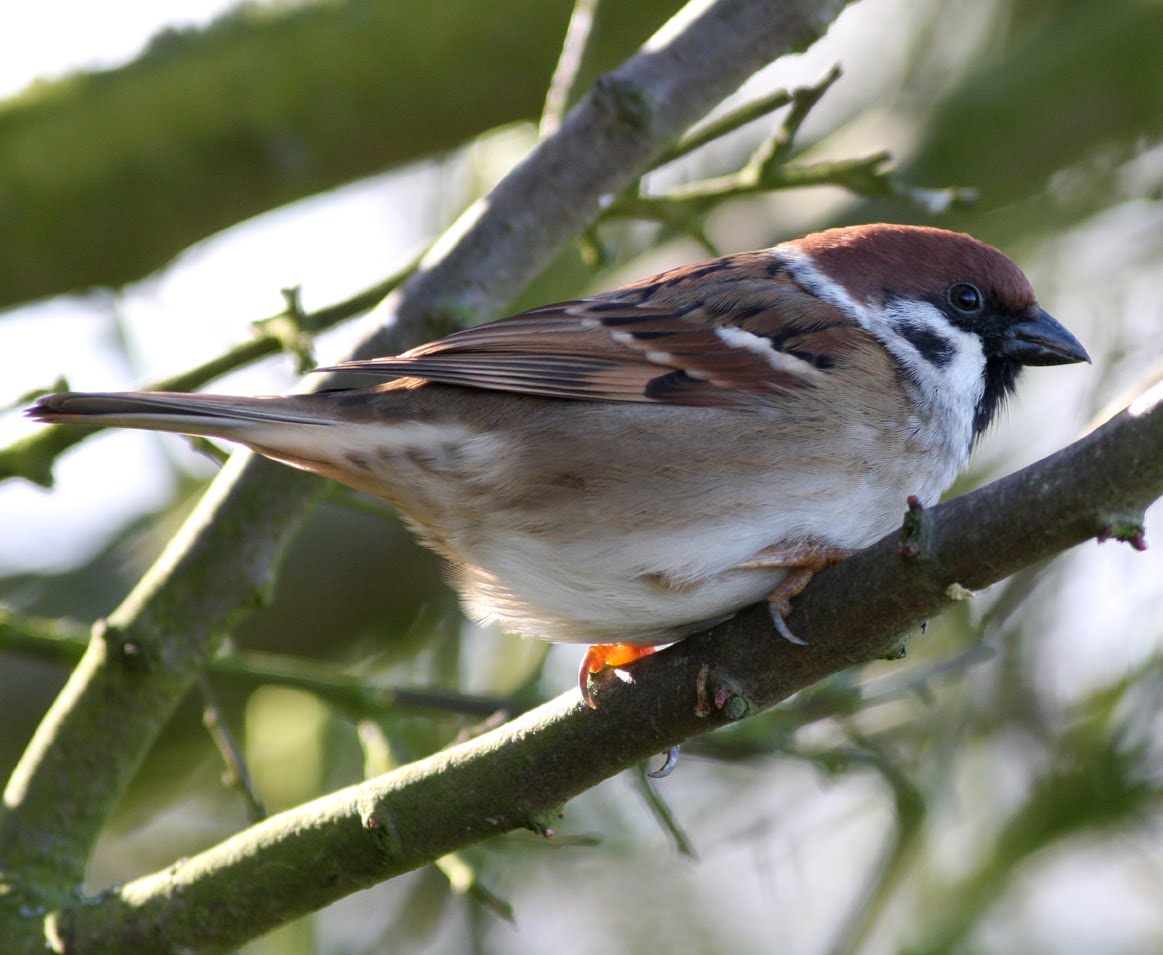
Herring Gull, Barn Owl, Tree Sparrow

Within the growing throngs of seabirds laying claim to ledges and crevices on the cliffs themselves, several pairs of Stock Doves investigated nest sites; a feature of the colony for as long as I can remember, they're an overlooked species in this habitat, and no counts (or even recognition) have been recorded to my knowledge.


Stock Dove at cliff-face nest site

An afternoon at Filey Dams YWT, always a pleasure, produced five Goosander alongside the more predictable groups of Teal, Wigeon, Redshanks etc.

Next time I come back to Flamborough, it'll be to do the deed with the other half...... but there'll be time for birding, naturally.


Shelduck, Goosanders, and a freakish House Sparrow in the back garden

Sunday, February 20, 2011

Pink sunshine


At last..... the Waxwing invasion that began in autumn last year has been one of the avian highlights of recent months, and from my urban outpost at Stoke Newington Reservoirs, I've had my fair share since the influx began; a couple fresh-in at the end of October, followed by a flock in mid December, and then a series of flocks (ranging in size from five to 60) during January and February. All good, except for the one thing they all had in common - all have been fly-throughs.

Over the last few weeks, several flocks have temporarily settled elsewhere in Hackney, some for a short period, others for longer; and the most reliable troupe have been here in Stoke Newington, visiting an enclave of back gardens between Winston and Albion Roads.


Sharp-eyed locals Penny and Neil have hosted a flock of variable size intermittently for over six weeks, kindly keeping me posted as the flock began to visit almost daily. A combination of work commitments and misguided patch faithfulness meant it took until this week to finally crack, and after an unsuccessful visit a few days ago, today, success.

A cold, damp and bleak Sunday afternoon prevented doing photographic justice to a group of 23 of the trilling beauties, but from the comfort of an upstairs window a short bus ride away, it hardly mattered. One of those birds it's seemingly impossible not to be heart-warmed by, and even better to see them posing beautifully in our beleagered urban borough.


....and a couple of different 'perspectives' of a flock in Bedfordshire in 2009 (for more, see here).

(Thanks again to Neil and Penny)

Wednesday, February 16, 2011

Dark days, pale dove


traditionally the most acutely tedius time of year is fulfilling its promise, and pickings have been slim at best over recent weeks; coupled with a lack of excursions and a heavy workload, spring can't come too soon.

Work isn't a always a four-letter word however, and a brief window of sunshine co-incided with a morning in Abney Park Cemetery showing one of our local Tawnies to groups of enthusiastic local children. While doing so, plenty of Stock Dove courtship and hole exploration signalled a welcome coming of spring, and one of the doves stood out to say the least - a leucistic bird, apparently paired up and guarding a hole in a poplar by the High St entrance.


And a Tawny showed very well at a traditional day-roost, making lots of already excited kids very happy.


Only a month until the first Sand Martin.......

Friday, February 4, 2011

Stoned Love


Writing species accounts for the 2007 London Bird Report recently flashed back a coronary-inducing morning in August of that year, and a birding experience I'm unlikely to enjoy again.

During 2007 and 2008 I spent a lot of time covering Walthamstow Marshes, a small greenspace at the southern, highly urbanised end of the Lea Valley in East London. Used primarily as a recreation area, heavily disturbed and barely qualifying as a marsh at all, it nevertheless has isolated habitats that are rare at best locally.

Over the course of 15 or so months of regular coverage, highlights included a low-hunting Marsh Harrier, Turtle Dove, Ring Ouzel, several Jack Snipes, wintering Stonechats and bucketfuls of breeding and passage warblers, but none compared with the morning of the 21st and a saunter with a friend and her dogs.


Flushing a Wheatear from the central area inspired me to follow its flightpath towards the riding centre field, a small, heavily grazed area sandwiched between the canal and the busy raised walkway which bisects the marsh. Refinding the bird (and a couple of Yellow Wagtails), I briefly scanned the rest of the field on auto-pilot, and paused at the only solitary clump of weeds; out poked a head with a large, staring yellow eye.

It was one of those comedic eye-rubbing moments that if I was holding a bottle of whiskey would've justified a melodramatic, confused look at the label, but instead, I looked a second, and then a third time before realising my sanity wasn't disintegrating. With families cycling past, dogs barking and horses trotting, the chances of the bird remaining more than a few seconds seemed slim; however, after a minute or so, it briefly broke cover, allowing more incredulous and conclusive views.


Applying my then-legendary pre-DSLR digibinning photographic 'technique', I managed a few record shots, which did indeed show a Stone Curlew, looking as confused and shocked as its admirer. A great bird in any circumstances; a truly great bird in these most inauspicious of circumstances.

Saturday, January 29, 2011

Patchwork 2010 - Invasion of the Honey Bees


Honey Buzzard, Provence, Aug 2010


Raptor-watching is one of the more addictive aspects of local birding, and one which I'll doubtless bang on about in greater depth anon. The last couple of years have been especially productive here in Stoke Newington, not least 2010, and not least concerning that most evocative of of true migrant raptors, Honey Buzzards.

While some theoretically more predictable species seem to frustratingly avoid being seen on-patch like the plague (read e.g. Mediterranean Gull), other, technically less expected visitors seem to emit an irrationally talismanic power (read e.g. Bittern and Honey Buzzard). Such is the beautiful unpredictably of local birding.


A month-long trip to Sweden a few years back culminated in a stay at the Obs in Falsterbo, timed very much with peak raptor passage in mind, and to say we got lucky would be a criminal understatement. Amongst many other highlights, Honey Buzzard movements were truly exceptional; on one memorable day, we sat transfixed in the sunshine as more than 1,600 passed overhead and alongside. Unforgettable, and highly recommended.


Honey Buzzards, Provence, 2010


2008 provided my first local Honey-B's, with wonderful views of a female circling low over the reservoirs on 30th May; the same year's notable autumn influx brought another, soaring high on 14th September. So the species was happily already on the radar locally, and with the amount of time dedicated to raptor-watching increasing year-on-year, a third was perhaps not so far away. 2009 - while memorable for raptor passage here (will it ever get any better than Black Kite?) - produced no HB's, but 2010 was to rewrite the rulebook once again.

An extended session from the Obs platform on the 13th May produced the first of the year, speeding north on half-closed wings and directly overhead at 1646; nothing like enough time to fire off the DSLR, but then, there's nothing like making direct eye contact with a Honey Buzzard while it bombs through Hackney well below the level of neighbouring tower blocks.

Throughout April and May, I spent one day a week scanning the vertigo-inducing panorama 600 ft up in the clouds on the roof of Tower 42, smack in the heart of urban London and one of the capital's tallest buildings. When the hype around the project had finally faded somewhat, committing to the real matter in hand - finding, recording and enjoying birds - thankfully took precedence, and with the help of a couple of other sharp-eyed London birders, the results were more than worthwhile.

Full details and photos can be found here, but it's worth revisiting to contextualise one particularly special day. Content enough with a respectable raptor list for this most urban of watchpoints (multiple Common Buzzards, Red Kite, Hobby, omnipresent Peregrines, regular Sparrowhawks and Kestrels), we were hopeful - but not expectant - of a class A find before the project was done.


Honey Buzzards, Tower 42, 20th May 2010

Come the 20th of May, and while waiting to be escorted up the 42 floors with Ian (Woodward, erstwhile North London BTO rep), the two of us were heartened by a suddenly warm airflow - if not the blanket grey cloud - which had encouraged a substantial kettle of gulls to begin thermalling over the tower. (Small mercies are worth appreciating with six solid hours teetering atop a skyscraper in Babylon ahead.)

Up onto the roof a few minutes later, and we'd barely set up our 'scopes before a very encouraging shape appeared from within the cloudbank, heading straight towards us; Honey Buzzard #1, clean past us, and west through the city centre. Bingo. More than enough reward for our efforts, or so we thought - but, less than two hours later, HB#2 followed an almost identical path, straight towards us from the south-east.


Honey Buzzard, Tower 42, 20th May 2010

What happened next however was, well, stunning (as it were); failing to find a suitable thermal and soon picked up by a pair of local Carrion Crows, the bird dropped dramatically towards Soho below, swung south directly past the windows of The Houses of Parliament, over the river and duly disappeared amongst the office blocks around Waterloo.

Assuming it'd made an emergency landing in one of the few trees in the area, I put word out amongst local birders and hoped they'd pick it up; not to be. A couple of days later, and we found out why - a local office worker got in touch, relating how a large bird of prey had thumped straight into his third-floor workplace window near Waterloo station..... Better still, while his colleague called the RSPCA, he took a few pictures with a pocket camera before the bird happily came to its senses and flew off south unharmed. A unique and amazing story.


Honey Buzzard on an office ledge in Waterloo, 20th May 2010

The following day, back on patch at Stoke Newington Reservoirs, and the forecast was again promisingly humid (if again overcast); hence, onto the Obs platform for another extended session. Recalling the timing of our previous day's sightings several km due south, I happened to mention to another local birder that we should expect one about now; incredibly, guess what appeared with the requisite corvid lynch mob on its tail....


Honey Buzzard, Stoke Newington Reservoirs, 21st May 2010


.... and there was more to come. Just past midday, and I mentioned we should expect the second one about now. Within a couple of minutes, (yet) another Honey Buzzard charted a unique path across the busy streets of central London, over the reservoirs, and then west over the Emirates stadium. Sometimes it's better not to ask why.


Honey Buzzard, Stoke Newington Reservoirs, 21st May 2010


Expectations of picking up large raptors are subtantially lower in the autumn compared with the spring, and their occurence is far less predictable; but with plenty of days spent scanning and counting visible migration movements, there's always a chance of picking something up. But #4 for the patch in 2010 came not in the above circumstances, but while giving a guided walk of the reservoirs to a gaggle of local schoolkids on 19th August - watching their host fall silent, break off from waxing lyrically about Great Crested Grebes, swear profusely and struggle to extract a DSLR from its bag all for a dot against the cumulus naturally caused plenty of amusement.

A few days later, and the best part of a week in Provence beckoned; lucky for us, good friends had bought a place in a village just south-east of Avignon, and it would've been rude not to visit. Full details and photos can be found here and here; no prizes for guessing one of the star birds of the trip.

Onto a nearby ridge in the searing heat of the 27th, 27 Honey Buzzards appeared from nowhere and thermalled for several minutes before disappearing south; others here and there overhead implied some movement taking place. A couple of days later, and another 20 or more appeared over us whilst with family a few miles east; encouraged by the signs, the following morning I took the scope up onto the small hill behind the house at first light, and witnessed an exhillirating passage of 187 heading low and south-west, all before before breakfast.


Honey Buzzards, Provence, August 2010

The following week, and a memorable trip back home in early September (Eastern Olivaceous, Brown Fly, impressive falls of migrants and plenty of scarcities) unexpectedly produced two more - while watching the very accomodating Hippolais, a kettle of Buzzards appeared (not something you can say more than once every few decades at Flamborough) containing 18 Common and two Honeys.


Honey Buzzard, Stoke Newington Reservoirs, 20th October 2010

Which really should be more than enough for one year, but there was another sting in the long and rounded tail. With thoughts of Honey Buzzards (and most other trans-Saharan migrants) long gone, 20th October was a cold, bright late autumn day, and I was on the platform, half in the forlorn hope of picking up a stray Rough-leg (after a mini-influx over the previous couple of days into the south-east).

A scan to the south revealed a large raptor distantly approaching, with a strangely familiar flight and shape - surely not? As the bird came closer, it inevitably attracted the aggressive interests of a pair of Carrion Crows, and spent the next couple of minutes battling north-east and eventually out of site behind the tower blocks. The fifth, and easily the least-expected, site record for 2010, in a year bereft of any influxes, in the middle of London; who needs Falsterbo?


Honey Buzzard, Stoke Newington Reservoirs, 20th October 2010

Sunday, January 23, 2011

Patchwork 2010 - Bittern on six fingers


Bittern, SNR, 21st December 2010

Number one in a series of boredom-relieving, reasons-to-believe-in local patch highlights from last year. Of course, all these and many more occur 'live' over at the Hackney Wildlife latest sightings page, but while pickings are slim there's no harm in isolating a few special occasions to remind myself why masochism is nothing to be ashamed of.

For those unfamiliar with the patch (and my endless ramblings about it online and elsewhere), Stoke Newington Reservoirs comprises two very small waterbodies deep within the dark heart of urban London, in the Borough of Hackney. A full overview can be found here.

Last year was particularly memorable, not least because I was able to cover the patch on something approaching 300 days, and with greater scrutiny than ever. Hence, a golden opportunity to nail often-dreamed of and unexpected species that would otherwise drift through unnoticed.


Bittern, SNR, 7th January 2010

Bitterns have become something of a star bird here in the last two winters; unthinkable previously, especially considering the miniscule amount of suitable habitat and unappealing location. Unrecorded in the area since the first record of a bird found in a Stoke Newington bus shelter in the infamous '62/'63 winter (admirable local knowledge perhaps, what with no tube station locally), 2009 provided the first modern record, watched from the Obs platform lolloping west at dusk on 28th October. At the time, exceptional, and a welcome addition to the personal list.

Until sustained coverage during the extended cold snap in January 2010 brought an amazing spectacle on the 7th: Coming in low from the east at around 1340 and maniacally harassed by a group of Carrion Crows, the bird looked to put down in the reedbed, but was recieving too much hassle; instead of continuing west (like the first site record above), the Bittern opted to swing around and land in the crown of a tree on the Woodberry Down housing estate.


Visible from my office window and garden, it remained in the treetop for at least ten minutes, defending itself admirably against a group of about 15 Carrion Crows and three Magpies. Despite constant attack, it managed to aim a potentially mortal blow at one of the crows, which tumbled out of sight....


Bittern, SNR, 7th January 2010

Fast-forward to March, and the first morning scan of the East Res revealed a suspicious movement in the reedbed on the far side; soon enough revealed to be another Bittern, the first actually seen utilising our Phragmites, and the first to be twitchable by other local birders (including the Birdwatch office - see Dominic's blog entry here).

Less than two weeks later, and a wander round the East Res perimeter produced yet another - a new bird (on flight feathers) flushed from close range on March 13th. Number four for the site, all in the same winter.

And so to this winter, and the idea of an extended period of freezing conditions bringing in a stellaris suddenly not sounding so foolish. After a fantastic week of weather-related scarcities and movements (Greenshank, Curlew, Jack Snipe, two Goldeneyes etc - all gold dust locally), December 6th brought Bittern number five - flushed by a fox, at close range, in the south-east corner of the reedbed.

A period of milder weather returned conditions, and sightings, to regulation mid-winter fare in the meantime; until a second period of severe, extended arctic conditions set in from the 17th - and bingo, another Bittern. Number six was watched drifting in from the south at low level, croaking noisily (not unlike a Brent Goose), and sensibly putting down into the reedbed before risking being taken out by the local Corvus / Larus hit-squads.


Bittern, SNR, 17th December 2010

Two days later and with the big freeze becoming even more extreme, presumably the same bird was initially flushed from the East Res perimeter on the morning of the 19th, and was later watched playing cat and mouse with the local foxes during the middle of the day from the epic panorama of the Lincoln Court rooftop.


Bittern, SNR, 19th December 2010 (from the roof of a neighbouring tower block)

The following day, and after watching the bird's behavioural patterns (commuting between the inflow and outflow much of the time), I relocated it by the outflow. With the light good, snow and ice coating everything in sight and camera at hand, I crept up on the Bittern - and instead of flushing as expected, it adopted the snake-necked camouflage mode, and both of us froze.


Bittern, SNR, 20th December 2010

Allowing approach down to about four metres (any closer and the camera lens impotent), the bird performed beautifully, under the impression it remained cleverly undetected... I left it in the same spot after five minutes or so, still neck-craning and immobile. Staying untill 22nd at least, it represents a wonderful part of local birding - from fantasy pipe-dream to eagerly expected in little more than a year.


Bittern, SNR, 21st December 2010