Champions of the Flyway!

Wednesday, March 16, 2011

three little steves


After a week-long vigil staring into space, finally they came today, and were well worth the wait; as an added bonus, an ultra-rare patch Redshank made a few ultimately doomed circuits before sensibly heading north. More at Hackney Wildlife.


Monday, March 14, 2011

open season


While the first Sand Martin back on patch may be 'late', large raptor movements have kicked in with a vengeance, especially today.....


Conditions have been mixed over recent days, but a sunny and mild period on Saturday produced the first Common Buzzard of the spring, low and north over the East Res; similiar conditions today looked promising, and a Red Kite (likewise the first of the season) looked particularly evocative just above the tower blocks and against a blue sky as it drifted east mid-morning. A Common Buzzard drifting some distance to the south added further inspiration.


A 'business lunch' on the roof of Lincoln Court - a neighbouring 15-storey residential block which is luckily also my Obs of choice for the spring raptor season - instantly produced. Setting the 'scope up and scanning north, no less than six Common Buzzards were thermalling together, before drifting north - a record simultaneous count.


Three of the same species ten minutes later some distance away may or may not have involved the same birds, but 'fresh' singles north and east over the next hour or so brought the day total to a minimum of nine, a new day record, and still so early in the season.... Peregrines were pleasingly omnipresent all day, and equally predictable were Sparrowhawk and Kestrel. Five raptor species in mid-March in urban central London will do just fine for now.


and some other photos from the patch over the last day or two; full details here

Wednesday, March 9, 2011

Walthamstow Reservoirs, 9th March 2011


Happiness is the first trans-Saharan migrant of the spring....

An early start filming with auntie beeb at Walthamstow this morning gave me a good reason to slink a few kilometres away from Stoke Newington (thus easing my guilt of patch unfaithfulness), and as I was there, it seemed a good idea to cover it properly.


Starting at 0730 and staying on the south side, a female Goosander, a Green Sandpiper, three Chiffys and a male Blackcap were all recorded alongside the multitudes of common waterbirds, including Great Crested Grebes (one of the intended Natural World star turns and today's centre of attention), which performed impeccably.


Within a couple of metres of the camera a Cetti's Warbler started up, and continued throughout, apparently the first here this year; ditto at least two Water Rails nearby (all of which are worth listening out for in the background of the film...).


Moorhen, climbing the fence vertically

Lunch at the nearby Ferry Boat Inn seemed like a good idea at the time and a bad idea just minutes later, when eight quid's worth of microwaved crap (a.k.a 'Jamaican stew' and the only vegetarian option in an encyclopaedic menu of rot) arrived with a fanfare; for 'great home-cooked food every day', read 'putting the enteritis into Gastro pubs'.


smacked out on honey, tragic roadkill or Ferry Boat lunch menu victim?

Moving swiftly along, it was time to cover the northern reservoirs in the hope of interesting wildfowl or a stray wader or two. The Maynards held little, and so around the Lockwood, heading anti-clockwise towards the edge of Tottenham Marsh, with a blustery south-westerly and sunny intervals still reguarly breaking through. Nine Goldeneye and another two redhead Goosanders were out on the waves, but no waders lurked along the favoured habitat in the north-east corner.


Continuing round and down along the western bank, walking along the edge itself is often productive, with small, hidden pockets of mud and shingle attracting otherwise unnoticed shorebirds. A group of waders flushed from one such pocket (no more than a couple of metres long and hidden from the main bank), which consisted of six Green Sandpipers, a Dunlin and a Common Sandpiper.

Content with a good selection of birds and with thoughts directed at kicking back with something edible to hand, a glorious, pin-sharp male Northern Wheatear whipped across the water in front of me and landed on the bank nearby.


The first true southern visitor of the year, the first Oenanthe to make landfall in London in 2011, and an unadulterated joy.


a local beauty


and another

Friday, March 4, 2011

Bohemian Rhapsody


With Waxwings not yet waning, another garrulus and self-indulgent bulletin on account of another couple of on-patch run-ins with them of late. As mentioned recently, I've been lucky to see them here at SNR in five of the last six months, but only in the last couple of days have they dropped out of the sky and into the treetops.


Walking to the office on Wednesday, nearby trilling magically cut through the traffic and human noise pollution, and a flock of 20 or more were perched in a tree bordering the East Res and the Jewish school. Hence the now familiar pavement-kneeling, bag-emptying, camera and/or bins grabbing routine in the busy street, at the exact spot (on Bethune Road) where I've had cause to do likewise for a Short-eared Owl, a flock of 100+ White-fronts, and various large raptors in the last couple of years.

Today, the same beautiful sound while on a circuit of the East Res, and a flock of 16 flitted overhead, swerved between the tower blocks and headed north out of sight. It could be a long time before our dark urban borough is graced by them again, so it seems only just to make the most of them.


Wednesday, March 2, 2011

Flamborough & Filey, 27th February 2011


Barn Owl

A whirlwind couple of days back home to see the folks, iron out a few wedding-related issues, and (luckily) squeeze in the best part of a day in the field; lucky in that the time I had spare coincided with a cold, sharp day of brightness, while those either side were equally cold but barely illuminated through the battleship clouds.


Lapland Buntings

The highlights of a morning spent along the northern cliffs from North Landing to the lighthouse were a flock of 50+ Lapland Buntings in the ploughed field between Northcliffe marsh and the sea, and a pair of wonderfully entertaining Barn Owls in the same area.


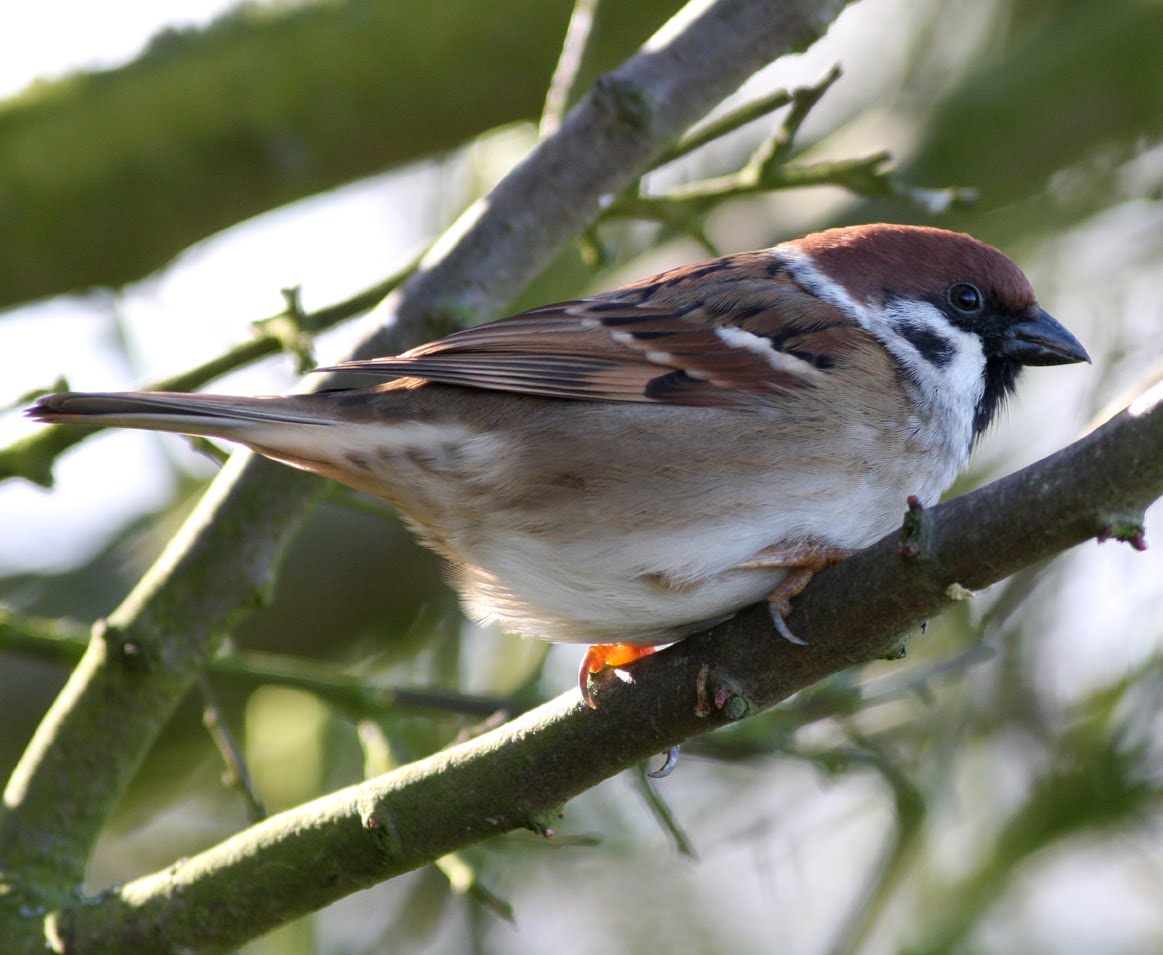
Herring Gull, Barn Owl, Tree Sparrow

Within the growing throngs of seabirds laying claim to ledges and crevices on the cliffs themselves, several pairs of Stock Doves investigated nest sites; a feature of the colony for as long as I can remember, they're an overlooked species in this habitat, and no counts (or even recognition) have been recorded to my knowledge.


Stock Dove at cliff-face nest site

An afternoon at Filey Dams YWT, always a pleasure, produced five Goosander alongside the more predictable groups of Teal, Wigeon, Redshanks etc.

Next time I come back to Flamborough, it'll be to do the deed with the other half...... but there'll be time for birding, naturally.


Shelduck, Goosanders, and a freakish House Sparrow in the back garden

Sunday, February 20, 2011

Pink sunshine


At last..... the Waxwing invasion that began in autumn last year has been one of the avian highlights of recent months, and from my urban outpost at Stoke Newington Reservoirs, I've had my fair share since the influx began; a couple fresh-in at the end of October, followed by a flock in mid December, and then a series of flocks (ranging in size from five to 60) during January and February. All good, except for the one thing they all had in common - all have been fly-throughs.

Over the last few weeks, several flocks have temporarily settled elsewhere in Hackney, some for a short period, others for longer; and the most reliable troupe have been here in Stoke Newington, visiting an enclave of back gardens between Winston and Albion Roads.


Sharp-eyed locals Penny and Neil have hosted a flock of variable size intermittently for over six weeks, kindly keeping me posted as the flock began to visit almost daily. A combination of work commitments and misguided patch faithfulness meant it took until this week to finally crack, and after an unsuccessful visit a few days ago, today, success.

A cold, damp and bleak Sunday afternoon prevented doing photographic justice to a group of 23 of the trilling beauties, but from the comfort of an upstairs window a short bus ride away, it hardly mattered. One of those birds it's seemingly impossible not to be heart-warmed by, and even better to see them posing beautifully in our beleagered urban borough.


....and a couple of different 'perspectives' of a flock in Bedfordshire in 2009 (for more, see here).

(Thanks again to Neil and Penny)

Wednesday, February 16, 2011

Dark days, pale dove


traditionally the most acutely tedius time of year is fulfilling its promise, and pickings have been slim at best over recent weeks; coupled with a lack of excursions and a heavy workload, spring can't come too soon.

Work isn't a always a four-letter word however, and a brief window of sunshine co-incided with a morning in Abney Park Cemetery showing one of our local Tawnies to groups of enthusiastic local children. While doing so, plenty of Stock Dove courtship and hole exploration signalled a welcome coming of spring, and one of the doves stood out to say the least - a leucistic bird, apparently paired up and guarding a hole in a poplar by the High St entrance.


And a Tawny showed very well at a traditional day-roost, making lots of already excited kids very happy.


Only a month until the first Sand Martin.......

Friday, February 4, 2011

Stoned Love


Writing species accounts for the 2007 London Bird Report recently flashed back a coronary-inducing morning in August of that year, and a birding experience I'm unlikely to enjoy again.

During 2007 and 2008 I spent a lot of time covering Walthamstow Marshes, a small greenspace at the southern, highly urbanised end of the Lea Valley in East London. Used primarily as a recreation area, heavily disturbed and barely qualifying as a marsh at all, it nevertheless has isolated habitats that are rare at best locally.

Over the course of 15 or so months of regular coverage, highlights included a low-hunting Marsh Harrier, Turtle Dove, Ring Ouzel, several Jack Snipes, wintering Stonechats and bucketfuls of breeding and passage warblers, but none compared with the morning of the 21st and a saunter with a friend and her dogs.


Flushing a Wheatear from the central area inspired me to follow its flightpath towards the riding centre field, a small, heavily grazed area sandwiched between the canal and the busy raised walkway which bisects the marsh. Refinding the bird (and a couple of Yellow Wagtails), I briefly scanned the rest of the field on auto-pilot, and paused at the only solitary clump of weeds; out poked a head with a large, staring yellow eye.

It was one of those comedic eye-rubbing moments that if I was holding a bottle of whiskey would've justified a melodramatic, confused look at the label, but instead, I looked a second, and then a third time before realising my sanity wasn't disintegrating. With families cycling past, dogs barking and horses trotting, the chances of the bird remaining more than a few seconds seemed slim; however, after a minute or so, it briefly broke cover, allowing more incredulous and conclusive views.


Applying my then-legendary pre-DSLR digibinning photographic 'technique', I managed a few record shots, which did indeed show a Stone Curlew, looking as confused and shocked as its admirer. A great bird in any circumstances; a truly great bird in these most inauspicious of circumstances.