Champions of the Flyway!

Sunday, July 10, 2011

Montana & the Rockies, June 2011 - part three


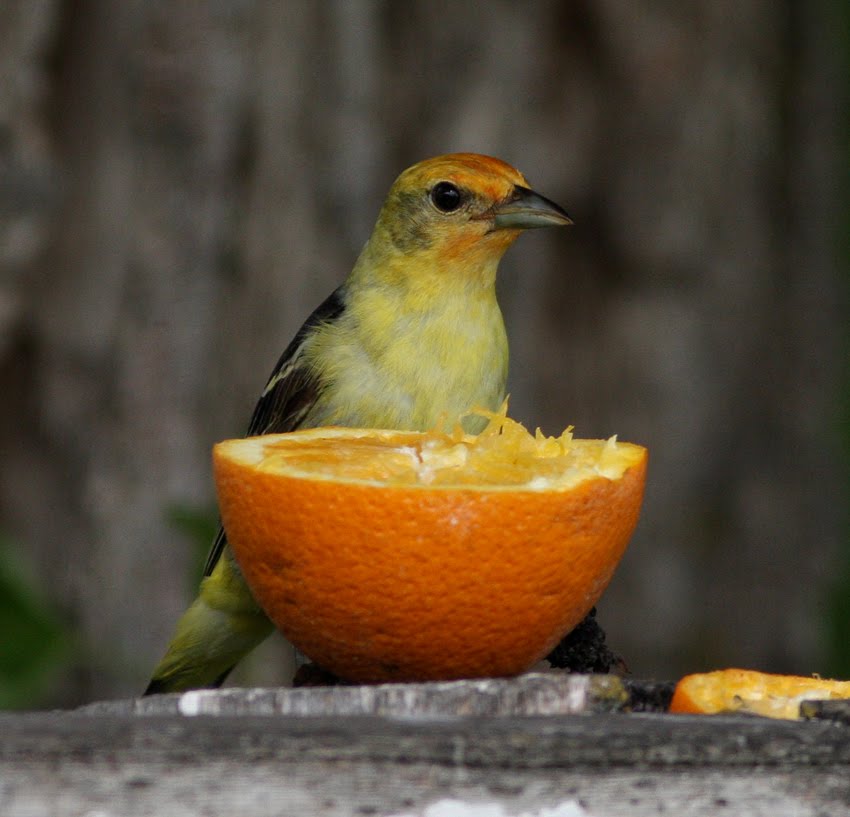
Western Tanager (seemingly everywhere for a couple of days only, and even more neon than the photos suggest)

With the rest of the remaining daylight on the 19th, we travelled south from the Harrison area and along the valley towards Ennis Lake, via typically stunning vistas and breathtakingly big skies. A deliberately slow meander involved multiple stops and wanders around the lake, a full loop around it, and then a route roughly north and east towards Red Bluff; from there, more cinematic, wide screen landscapes before eventually returning home after dark.


Savannah Sparrow


/>

Barrow's Goldeneyes


Mountain Chickadee


Dark-eyed Junco (local subspecies)


Wilson's Warbler


Lincoln's Sparrow


female Yellow-rumped Warbler of the western Audubon's subspecies


Osprey (and Passer domesticus smartarserei)

The following day (20th), we headed into the mountains south of Bozeman, along and parallel with Hyalite Creek for most of the day. Dramatic waterfalls, rugged, snow-capped ranges, thick pine and mixed forests with lush, marshy clearings, and mountain lakes; mesmerising panoramas, stacks of great birds (including fistfuls of lifers on a daily basis), and although hard to believe at the time, the best was yet to come.


American White Pelicans (as watched by Amity and Bluette)


Yellow Warbler


even in the middle of nowhere, there's always a cool dog to play with


Western Grebes, Osprey, Pronghorn Antelope and White-tailed Deer

Friday, July 8, 2011

Montana & the Rockies, June 2011 - part two


Clark's Nutcrackers

The first part of day two saw us drive an hour or so south-west of basecamp, through typically stunning landscapes, to the Harrison area, and down a long dirt track to hook up with Bluette and John's good friends Mike and Steph. Our hosts laid on a delicious banquet lunch in their idyllic and remote homestead, before we were given a tour of the local area - rolling farmland surrounded by mountain ranges, with stands of trees, areas of scrub, and at the heart of it, their very own nature reserve.


Eastern Kingbird, Western Kingbird, Western Wood-pewee

Intent on providing the best possible habitat for the birds and wildlife of the valley, Mike and Steph have been working for years on their land, giving it full protection and gaining as much in the eyes of the law, involving and partnering with conservation organisations, planting native trees and much more besides, resulting in a river/floodplain-dominated oasis of lush, biodiverse habitat.


the main road


on the reserve with (L-R) Bluette, John, Mike and Steph


female Mountain Bluebird


Brewer's Blackbird


Vesper Sparrow

Highlights here and on wanders within a kilometre or two included nesting Ferruginous Hawks, tame and entertaining Clark's Nutcrackers, breeding Western Wood-pewees, Northern Harriers, Lark Sparrows, Dusky, Willow and Least Flycatchers, plenty of Mountain Bluebirds, Loggerhead Shrike, plenty of Western Tanagers, Vesper Sparrows, Wilson's Snipes, Brewer's Blackbirds, Bullock's Orioles, a large female Peregrine (sparring low overhead with the local Red-tailed Hawks), and numerous Common Nighthawks on the move.


Common Nighthawks


Least Flycatcher


Western Tanager

Monday, July 4, 2011

Montana & the Rockies, June 2011 - part one


And so into lip-smackin', breath-takin', mind-blowin' Big Sky Country. Thanks to the kindness of strangers (who would soon become much more than distant family), we'd jumped at the opportunity to factor Montana into our evolving cross-country schedule, and were eventually delivered to Bozeman around four a.m., greeted by our ever convivial host and unrivalled tour guide, Bluette.


Bullock's Oriole at the garden feeder

Having made headway into the state under cover of darkness, our first taste of our environs came as we drove the 15km or so north of Belgrade, first along deserted main roads, then dirt tracks, just as dawn began to break; those funny-looking clouds were soon re-identified as mountains, and our basecamp for the next few days was evidently positioned amongst not one, but four ranges within the eastern Rockies....


Great Horned Owl - kicking around by the roadside in the middle of the day

A few hour's half-sleep later and we found ourselves in a beautiful house, from outside and in not unlike an oversized log cabin, built by our other host - the wonderful and accommodating John - forty-odd years ago. Around us, fertile farmland rolled gently on our plain at 2,000 metres asl; beyond which, the mountains varied from Cumbrian to Alpine, from pine-coated to entirely snow-capped, and from almost touchably near to far, far away. A sense of space like I'd never experienced before, and all this before stepping off the porch.


Dark-eyed Junco of the (very) local Pink-sided subspecies

Our stay in the Montana / Wyoming wilderness with Bluette and John lasted a full week (a shorter stay was planned, but we extended it as long as we could), during which time, we were exposed to more natural beauty and heart-stopping wildlife than our wide, wide eyes could take. Leaving the house before dawn and returning after midnight wasn't unusual, and every daylight hour was dedicated to the cause.


female Lazuli Bunting at the feeders

Our hosts took it upon themselves to put their lives on hold for the week, instead filling each day with bespoke, local-knowledge immersed tours of the best their part of the world had to offer within a 200-mile radius, which, to understate wildly, is a great deal.


Ruby-crowned Kinglet

Our first afternoon was spent in the local area, within about 20 km of the homestead, and incorporated a clockwise loop through farmland, pine woods and mountain passes, mainly in and around the Bridger range and canyon. Of many avian highlights, Red-tailed Hawk's nests were seemingly in every stand of trees, a Great Horned Owl shook off the drizzle in full view, Ring-necked Pheasants and Grey Partridges scuttled through stubble (oddly reminiscent of Flamborough), Audubon's Warblers, White-crowned and Lincoln's Sparrows, Dark-eyed Juncos, Yellow Warblers and Pine Siskins populated forest clearings, and Bullock's Orioles, both Kingbirds and plenty of other common species were in the garden.


Red-tailed Hawk young in the nest


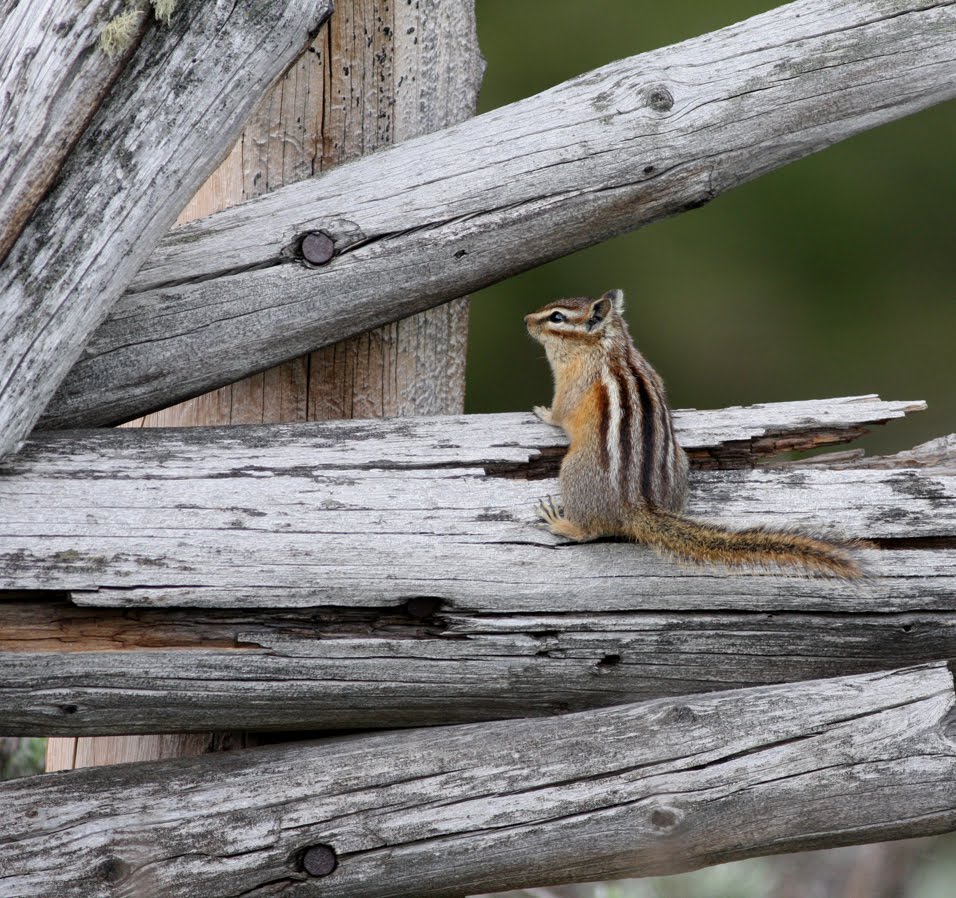
Chipmunk


White-crowned Sparrow (Interior West subspecies)


Lincoln's Sparrow

And that was just the first afternoon.....

Sunday, July 3, 2011

North Dakota and Minnesota, 17th June 2011


Theodore Roosevelt National Park, North Dakota

Almost Independence Day, and writing here in urban Seattle (which has been our basecamp for the last ten days or so), it's easy to allow the epic Greyhound journeys which carried us from the Atlantic to the Pacific - with no terminal cracks to show for them, just a few hairline fractures - to blur into one amorphous, vaguely psychedelic mass. Each, however, has had its own unique cast of characters, heavily improvised script, model and condition of vehicle, rest-stop and stopover towns, weather patterns, variations on a night-dawn-day-dusk-night timeline and, most memorably, landscapes.


One of the most memorable thus far was the long haul from Minneapolis to western Montana, which began shortly after dawn of the 17th, and ended just shy of sunrise on the 18th. A route which saw us travel north-west through Minnesota, changing at Fargo, gunning due west pretty much as the crow flies through the entire length of North Dakota, and on through Montana to Bozeman, contained not only enough characters, occurrences and pit-stops to comfortably fill a collection of short stories, but unique, changing landscapes and a host of birdlife.


Northern Harrier

Minnesota's lush, green meadowland hosted well scattered woodland and copses, and more lakes and ponds than the entire United Kingdom landmass probably ever had (10,000 lakes, indeed); and under stormy skies, American White Pelicans played the starring roles, backed up by a decent raptor roll-call that included Northern Harrier, Peregrine, American Kestrel, Bald Eagle and Broad-winged, Red-tailed and Red-shouldered Hawks.


But for numerous Great Egrets and Green Herons however, most waterbirds went undetected or unidentified, on account of the conditions and the views - the latter dependent on speed of vehicle and its proximity to the habitat outside. No such handicaps in North Dakota, however; after a changeover in Fargo (it was everything we anticipated, and more), the next eight hours or so, due west along 94, were something else.


Sandhill Cranes

It would be difficult to plan a better scenerio for enjoying ND, its countryside and its birds, and all while barely having to lift a finger. 94 is a near-deserted road that cuts clean through the heart of the state; and the 'hound slowed up enough, and for long enough periods (thanks mainly to recent biblical flooding), to allow enjoyment of birdlife through a wide-screen HD window at one's own leisure......

Regarding species, the only vague warning I had was the range maps of various waterbirds in the field guide (having satisfyingly exchanged Sibley east for Sibley west in the hand luggage en route); it seemed likely that most of the productive habitat would be out of sight, or perhaps travelling too fast outside of, the Greyhound window. Not so. Regarding the habitat and its productivity, I'd no warning at all, and so as we travelled into a landscape of flat, ostensibly bleak farmland, thoughts to turned to writing or napping; but suddenly ponds, lakes and flashes, many right by the road (and occasionally over it) became commonplace, and birds were seemingly everywhere.


Many naturally had to go unidentified (especially wildfowl, and most passerines), but with practice, a technique of instantaneously sorting the wheat from the chaff - i.e. focusing only on those where the chances of positive ID are above a certain level (not unlike, say, jungle flock birding) - became second nature, frustration was overshadowed by enjoyment, and within a couple of hours, I'd gained a half dozen new life birds, almost by accident.

An avian roll-call between Fargo and Bismarck went something like this: of well-scattered wildfowl, Pintail, Shoveler, Gadwall, Green-winged Teal, Ruddy Duck, Canvasback and Redhead were all nailed; Swainson's Hawks and American Kestrels were regular roadside hunters, with occasional Northern Harriers drifting by; American White Pelicans seemed to own the State, with squadrons in all directions and nests by the roadside; several unidentified grebes passed before the first legitimate Western;


Red-tailed Hawk (and ex-gopher)

terns - almost surreal in such an environment - were represented by summer-plumaged American Blacks, Caspians and Forster's; Western Kingbirds, Bobolinks, Western Meadowlarks and Yellow-headed Blackbirds were among the fenceline-dwelling passerines; Wilson's Snipes and American Avocets clocked in for the waders; and both Franklin's and California Gulls (the former resplendent with summer hoods) were sprinkled over neighbouring wetlands.


Big Sky country

A rest stop in Bismarck signalled a complete change in landscape; gone were the eastern half of the State's innumerable waterbodies and muted tones, replaced by an endless, rolling, neon-green moonscape of grazing plains. Right up until about South Heart that is, when another dramatic change had our driver slowing to a crawl and all our fellow passengers pressing up against the windows of the bus, simultaneously chorusing coo's and exhales as we snaked through the sci-fi canyons of the Theodore Roosevelt National Park, aka the northern Badlands. A fittingly stunning climax to our border-to-border trip through North Dakota; and Montana was still to come.....


(*the 17th was Amity's birthday, most of which she spent aboard several greyhounds; I did, however, buy her some inedible french toast at a filthy diner located within a hammer-horror bowling alley, in turn within a godforsaken meth-town somewhere along the way; no complaints there then.)


a special place