Champions of the Flyway!

Wednesday, January 12, 2022

Paull, 12th Jan '22

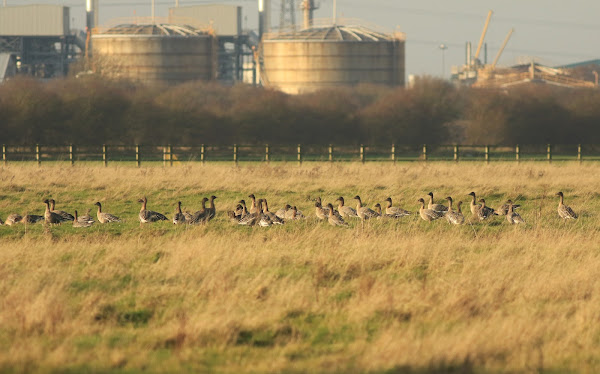
A few from a full day's surveying on the North bank of the Humber, at Paull - thousands of Golden Plovers, Lapwings, Pink-feet, Dunlin and more, plus lots of Curlews, Wigeon, Teal and Merlin and Marsh Harrier enjoying the happy hunting grounds.

Sunday, January 9, 2022

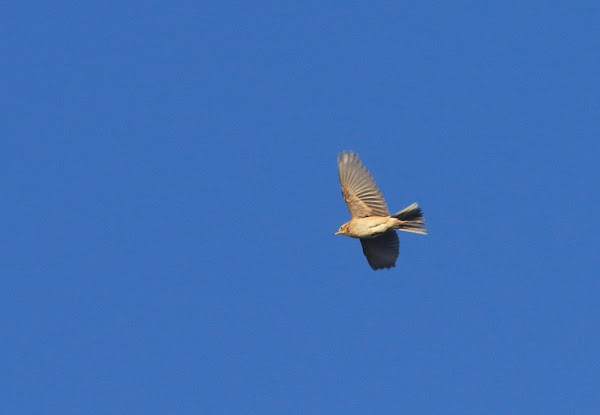
Richard's Pipit, Filey - 9th Jan '22

(Edit - above image added 13.01)
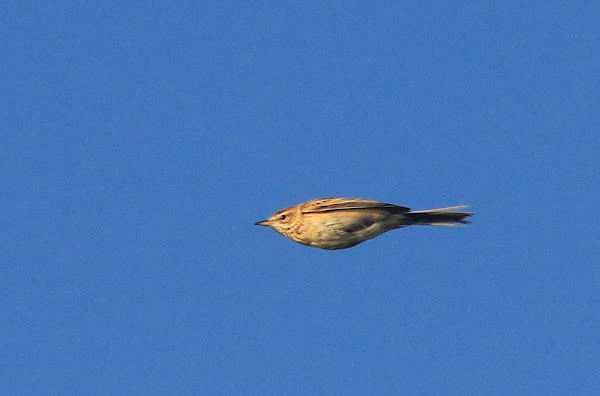
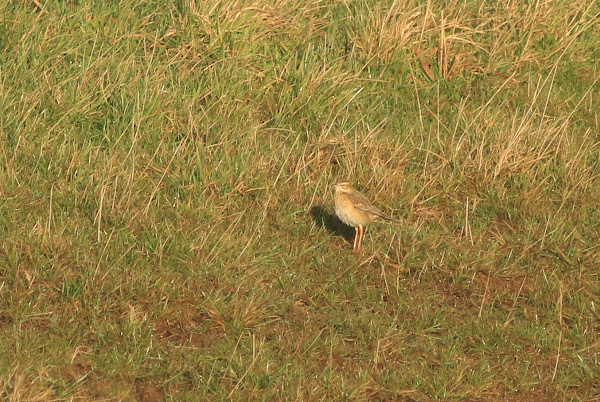
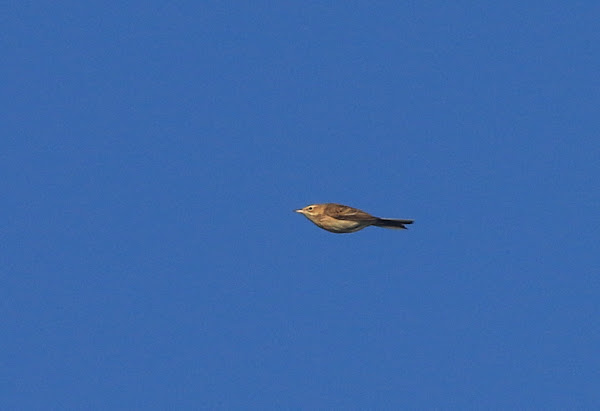
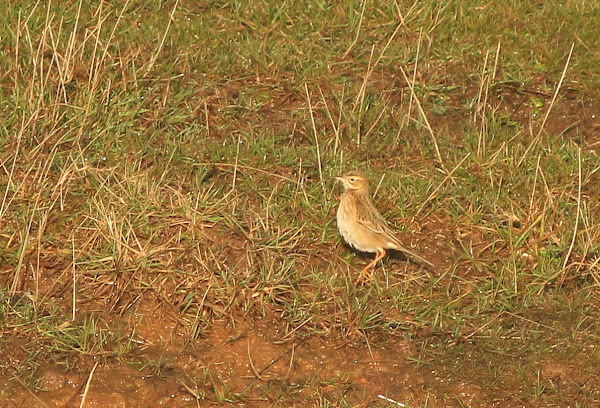
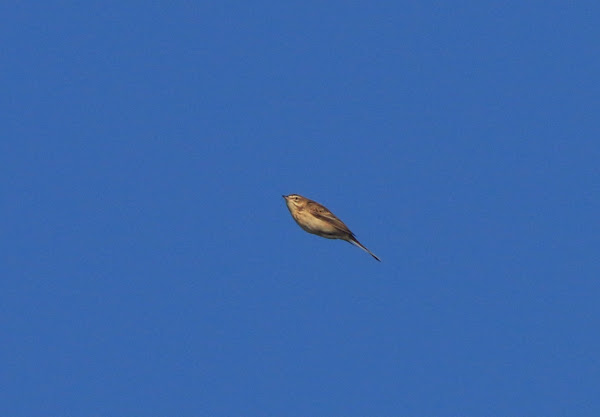
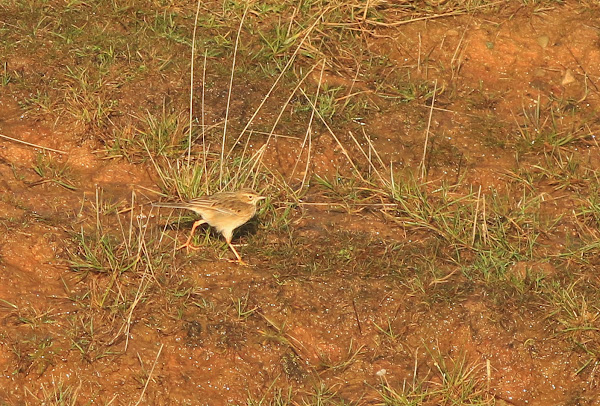
Flight and ground shots, video and audio of a Richard's Pipit, kicking around Carr Caze and the Rocket Pole Field here in Filey presently. Presumably the same bird found by Graham (Scott) over the holidays and reported by visiting birders a couple of times since, it's a disproportionately rare bird here in Filey - while not even a county rarity, it's far less than annual here, and I've only found two here in nearly ten years.


I ran the mp3 recorder in the hope of capturing some flight calls, which happily worked out - the lower, sparrow-like chirps are pretty clear alongside the higher squeaks of Rock and Meadow Pipits:


(... I've also left a little treat at the end of the recording for birders and sound recordists everywhere - yep, the timely intervention of Joe Public!)
For a while it gave great views and favoured the edges of the pond, but inevitably got hassled by birders and photographers (who even entered the field...) and sensibly withdrew to a less public area; if it's allowed to settle, it will likely remain fairly easy to enjoy.
Happy birthday to our much missed friend Martin (Garner), who would've been 58 today, and would have enjoyed (and added greatly) to this experience. Enjoy the birds, and each other, while you can.

Saturday, January 8, 2022

Review Of The Year, 2021 - Part Three

This post summarises July, Aug and Sep 2021.. for Part One see here, for part two, see here, and for the final part - check back in a few days! 

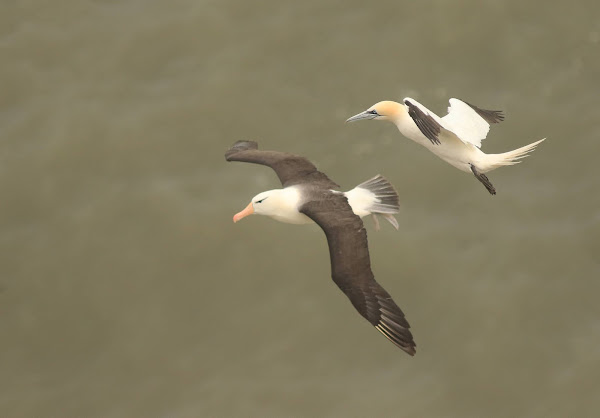
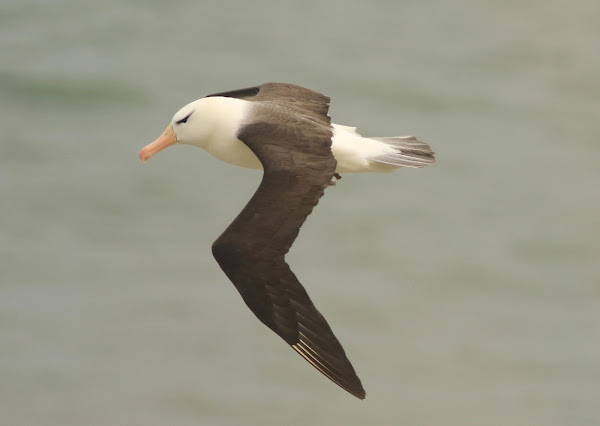
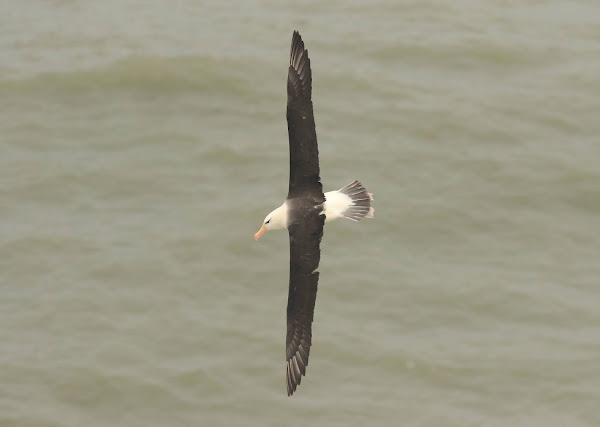
As readers of Part Two will have gathered, the spring ended - or the summer began - with a bang, in the shape of that majestic, ultra-charismatic, beautiful beast, the returning Black-browed Albatross. After erratic and brief visitations to the Yorkshire coast in several previous summers (including a memorable seawatch fly-by for me here at Filey two years ago), in 2021 it embraced the mixed blessings of the Bempton Gannetry for much of the summer, and in doing so became undisputed Bird of the Year.
Not that anyone could've predicted as much when news got out retrospectively at the end of June; in fact, it could easily have been the bird's only jolly here in '21, but thankfully, she/he formed something of a behavioural pattern over the following months, and was enjoyed by thousands of justifiably adoring fans. Whether it returns in '22 is anyone's guess - although the smart money may on the affirmative, it having put in a full season here, and how that correlates with past long-term Black-browed Albatrosses and their summering routines around the UK coast - but either way, it was one of those birds that transcended mere mortal status and became an avian folk hero, as deserved.
I was lucky enough to get great views at my first attempt, and then on many other occasions as the summer wore on - whether guiding, with friends (what a bird to show your non-birding visitors), or just because I was passing. What I could never have predicted was being able to include it in both my bespoke summer guiding tours and then again in my Autumn Birding Discovery Days in September....
Summer in the Highlands 

For the second year running, foreign trips were cancelled and any hopes of getting off these islands were again scuppered by the plague, but like last year (when we had a great trip to Anglesey and North Wales), we enjoyed a memorable getaway closer to home. With accommodation pretty much everywhere either booked up, massively hiked in price or most often both, we thankfully found an Air BnB in one of our favourite regular bolt-holes, Grantown-on-Spey in the Highlands.
Sanderlings at Findhorn Bay 

We usually go in November (when we're guests of the wonderful team at the Grant Arms Hotel - see next post), but we'd never visited in the summer, and so had a blast visiting our usual haunts and exploring new places off the beaten track, and contrasting the lush, fertile, wildflower-peppered valleys with the harsher, bleaker beauty we're used to in early winter. Wonderfully - especially after such a royally shit spring weather-wise - we had perfectly warm, often sunny conditions, and all was very much well with the world for a few days at least.
As usual, we broke up the journey there and back with nature-themed diversions - on the way up at Eyemouth and St Abbs' Head, and on the way back at Kinghorn, Fife, where we'd great views of our target species the Sei Whale, amazingly followed by a large pod of Short-beaked Common Dolphins gunning it towards Edinburgh....


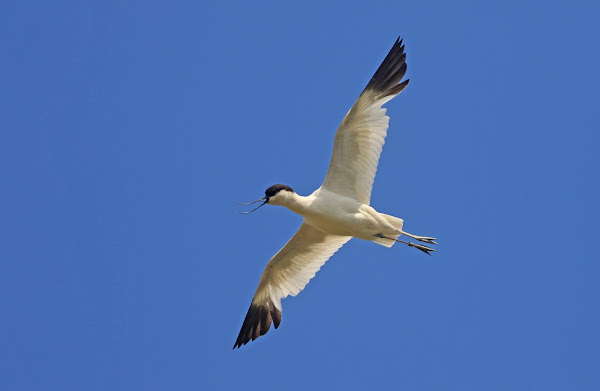
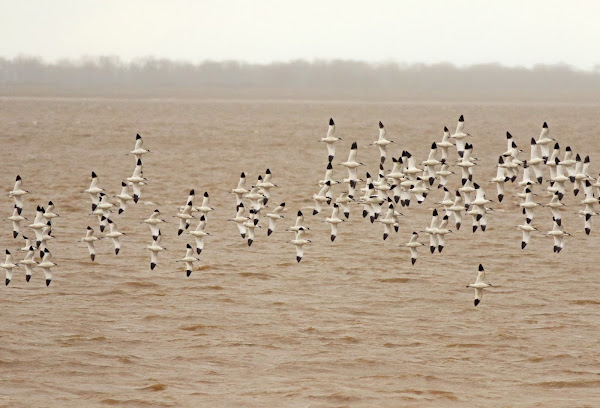
After the craziness of the spring and ensuing breeding season, surveying slowed up for a while midsummer, although continued on the Humber, and included breeding Avocets (below); as autumn began, so the projects picked up pace once again....
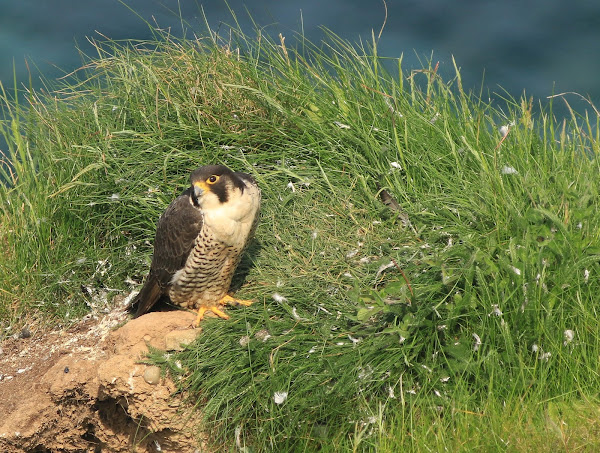
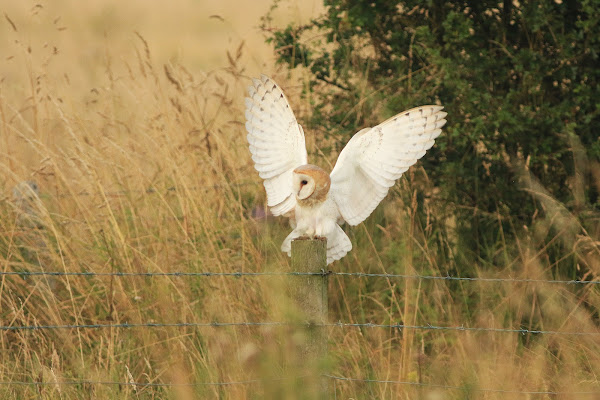
... while continuing my voluntary monitoring of the Filey seabird colony for the RSPB meant bumping into the local Peregrines and Barn Owls on many occasions:
As mentioned, there'll be a full 2021 Nocmig summary to follow soon, but early autumn - and July in particular - continued the lucky sonic streak, particularly on my North Cliff recorder here in Filey, with two Quails and another Bittern calling over the Audiomoth, among many other migrants - more here.
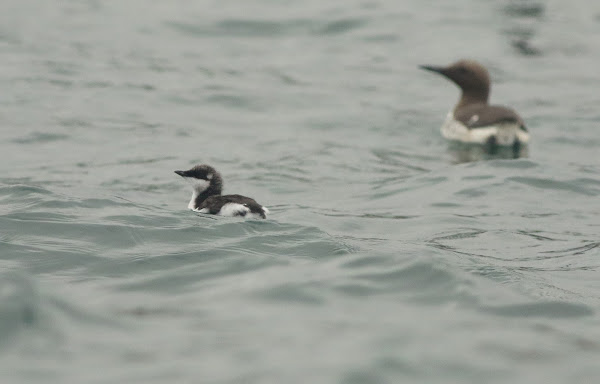
Guillemot (and other auk) chicks were a hit with our clients on YCN boat trips in July....

Towards the end of July, it was time to start our YCN Seabirds and Whales pelagic trips once again, which ran all the way through until the end of September. They were, as always, a joy to lead - and although the whales left it a little later this year, Bottlenose Dolphins, Porpoises and seabirds more than filled the bill until they arrived. I was lucky to lead many of the trips, and it's a part of the calendar I look forward to every year, especially in the depths of winter....

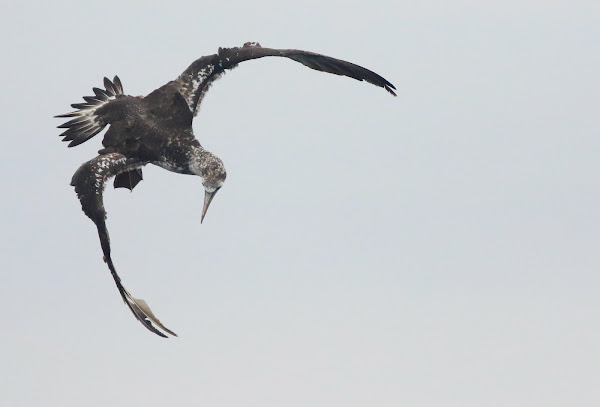
Gannet behind the boat on one of our YCN Pelagics 


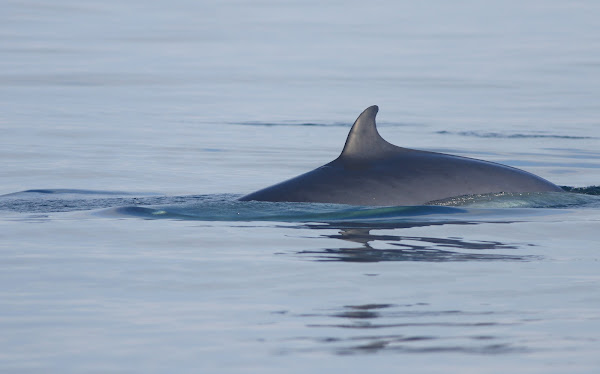
One of many Minke Whales close to our boat through the season 

Pelagics and surveying aside, August and September allowed for plenty of local patch birding, especially here on my doorstep in Filey. Unsurprisingly, time and effort paid out across the board, and while it was an especially poor early autumn for commoner passerine migrants, there was plenty of turnover and migration to enjoy on a daily basis. Wader passage was excellent, especially in August....


.... while seawatching was quality throughout:
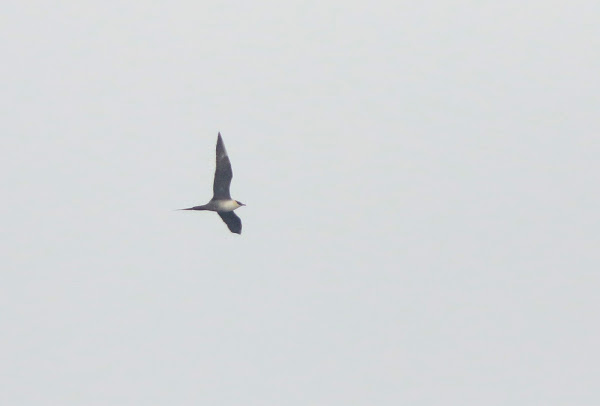
Adult Long-tailed Skua over Carr Naze, August
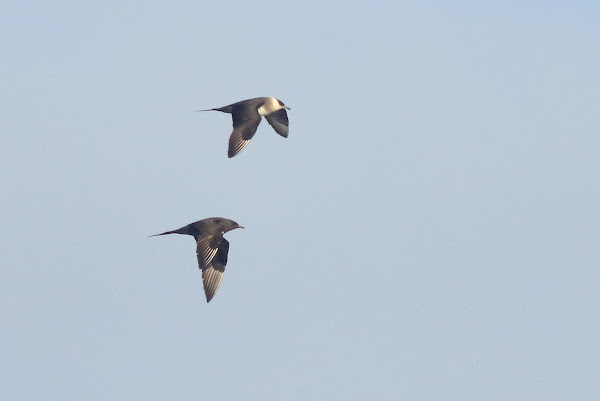
Pale and dark morph Arctic Skuas, Filey, August


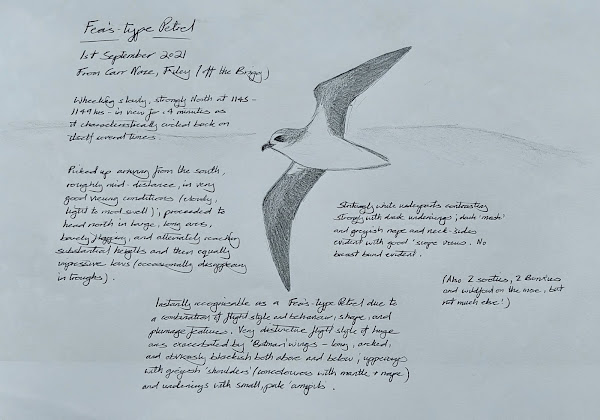
There were many quality birds, cetaceans (including regular Bottlenose Dolphins and Minkes) and days of sustained passage, the best of the former being my second Filey Fea's, which staged a faultless, five-minute fly-by on 1st September:

Caspian Gulls are still very much a rarity at Filey, with just a handful of substantiated records - and so finding two juveniles on one day at opposite ends of the bay was a treat:  


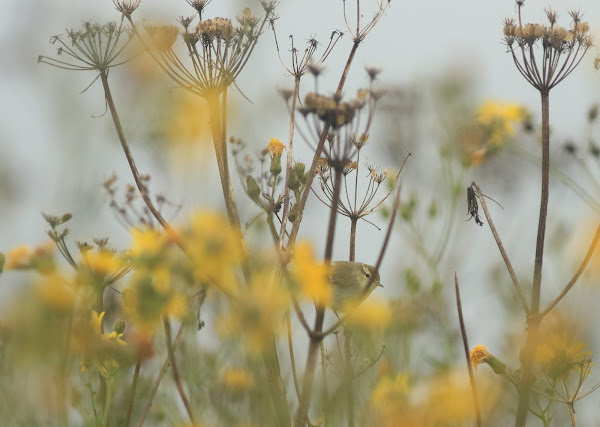
Passerine migration was hard work, not helped by constant westerly winds and Atlantic lows, but a brief whiff of an easterly on 22nd August produced one of those classic Filey moments that make it all worthwhile (more here). After a quiet seawatch at Flamborough and an even quieter walk at Buckton, I gave Carr Naze a whirl - and was rewarded by a pristine Greenish Warbler arriving literally in front of me and buzzing around the umbellifers...
First contact 

Amazingly - assuming it was the same bird which made its way to Arndale by the following morning - it was soon joined by a second bird; stopped in my tracks by both calling at each other and then one bursting in song, it's not an experience I expect to replicate here anytime soon....

Staying with the Phylloscopus theme, when news broke of a Green Warbler down the road at Buckton a couple of weeks later, it was always going to be a bunfight of a twitch, and so I figured if it was still there in a few days (and after the weekend), I'd drop in. It was, and I did, and it was educational for two reasons - firstly from an ID perspective (it wasn't hard), and secondly, as a reminder that I'm not good at these things; contrary to what I'd hoped for there were shedloads of twitchers there, and, except for the brief but educational views, it wasn't my idea of happy birding and I did one after twenty minutes.

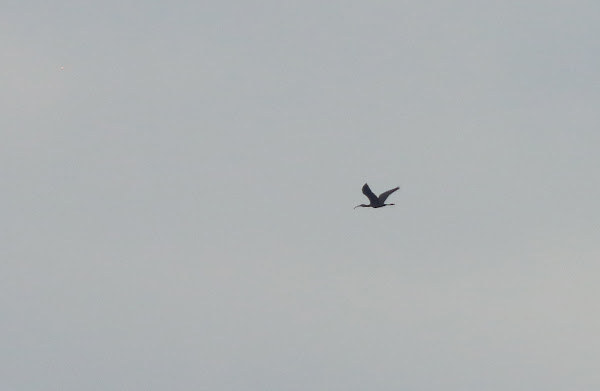
Much more fun, however, were my Autumn Migration Discovery Days, which kicked off in September, and - with the caveat that I can adapt our schedule according to the birds and conditions - the greater Flamborough Head was once again the justified venue of choice for pretty much all of them. We had some memorable days in September, which were the beginning of a very lucky streak re: finding or bumping into rarities - starting with our group-find Glossy Ibis (only the third for Flamborough):

And while I may not have made it out of the UK this year (again), I got as far as could without doing so - namely Shetland, for just over a week from 28th September to 5th October. Which seems like a good place to start the final part - check back soon for more....

Sunday, December 26, 2021

Review Of The Year, 2021 - Part Two

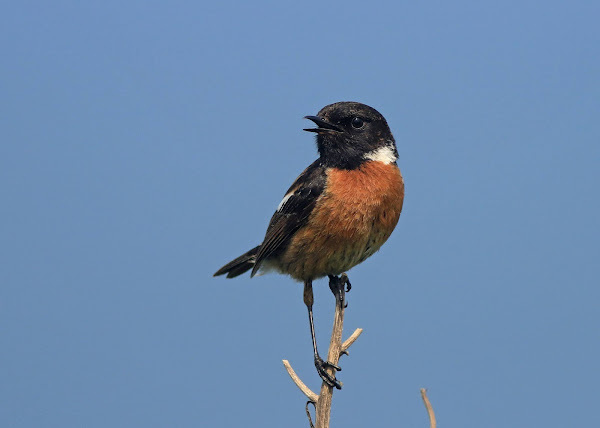
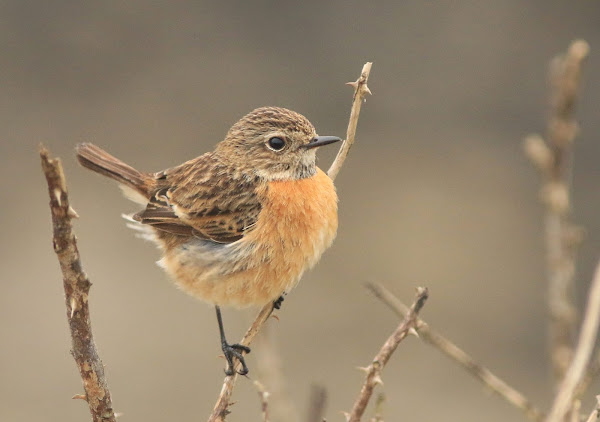
Male and female Stonechats, which successfully bred along the North Cliff here at Filey this year 

This post covers April, May and June 2021. For Jan, Feb & Mar, see here; for later in the year, watch this space... 

If the first quarter of the year was a gentle waltz with a glass of port, then the second was an almost constant Charleston with a rolled-up tenner and a hand mirror.... But first, in haste to bang out the last post I forgot to mention the long-distance, trans-Saharan summer visitors that made it back at the end of March; nothing unusual about that, of course, but against the backdrop of ongoing uncertainty, their always joy-giving properties were amplified even more again this spring. Wheatears and hirundines have never mattered quite so much....
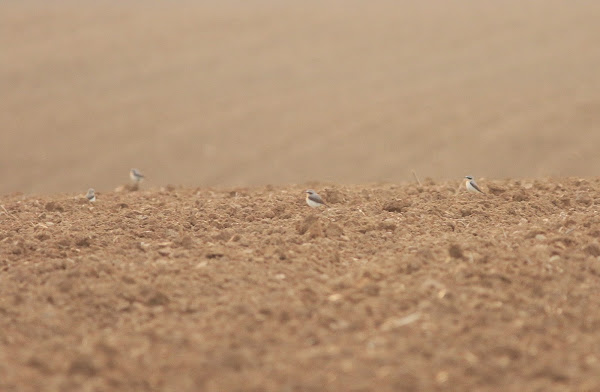
Some of the 12 Wheatears which materialised in the last of the light on 30th March in a single ploughed field here in Filey. It's the little things.... 

So, onto April, May and June. The work calendar was rich, varied and fully loaded: we conducted Breeding Wader Surveys across the North York Moors from mid-April to mid-June; the Humber surveys continued throughout (and indeed intensified at several sites); happily, guiding recommenced, with a series of my Spring Birding Discovery Days, and also group tours; and there was lots of 'recreational' birding inbetween... so it was basically wall-to-wall birding of one form or another right through until early summer, and thank the gods for that.
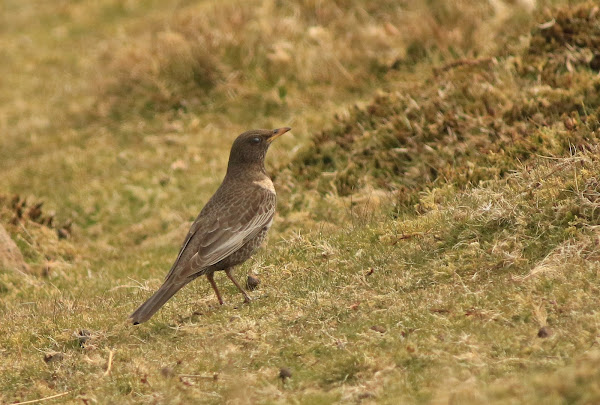
Ring Ouzel - great to find plenty of breeders up on the moorland edge 

It was a huge pleasure to get back onto the North York Moors for another intensive survey project, this time involving breeding waders at mid-and lower levels. Following on from our Upland Breeding Wader Surveys in the spring and summer of both 2018 and 2019, this year's surveying was equally extensive and fruitful, and again incorporated recording not just waders, but all the Red- and Amber-listed breeding species we could find.


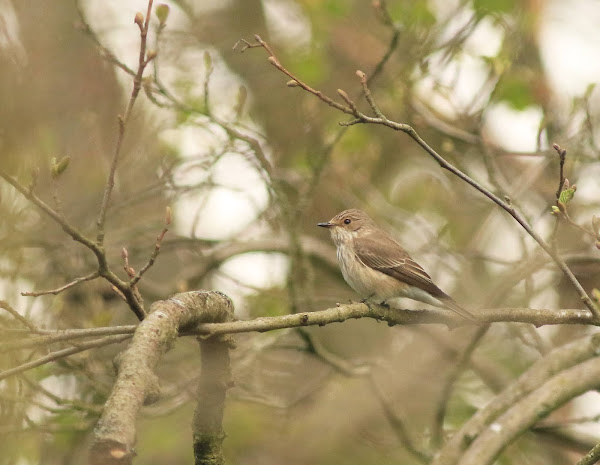
These included Merlin, Tree Pipits, Redstarts and Spotted Flycatchers (below) on territory, Dippers and Grey Wagtails along the rivers, and the study species themselves (with breeding Snipe, Curlew, Lapwings, Woodcock and Oystercatcher all in the mix), and there was always plenty to enjoy, in often idyllic surroundings.
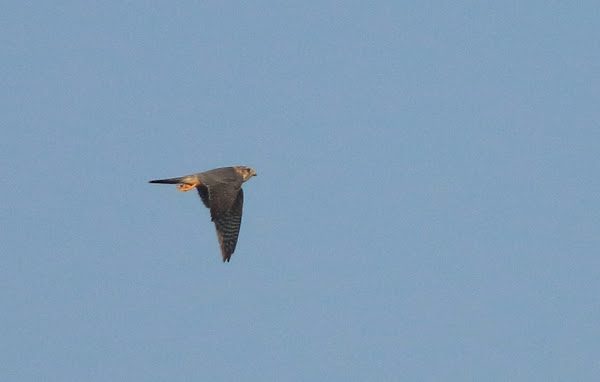
A male Merlin up on the edge of the moors - a rare and threatened breeding species, and always a buzz to find new territories 

The dynamic of the Humber surveys changed with the season, with species diversity and abundance reflecting the ebb and flow of migration. As always, witnessing the spectacle of so many birds swirling over the mud and feeding up before their onward journeys north was a privilege.

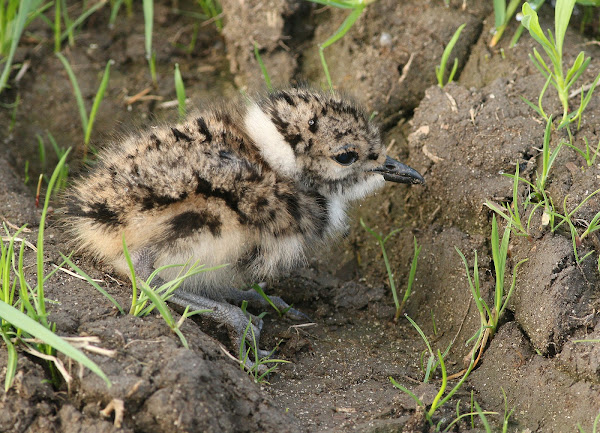
Lapwing chicks - good company on survey days up in the Moors 

Meanwhile, back on the coast.....


My Yorkshire Coast Nature Spring Birding Discovery Days were a huge pleasure to lead, being new for 2020 and booked up well in advance - and after the plague-delayed start to the guiding year, I was straining at the leash to share our amazing local birdlife with our fine YCN clients. We've the choice of multiple venues along the local coastline to maximise the best birding experiences, but most of the tours focused on the mighty Great White Cape of Flamborough - incorporating hotspots across the greater Flamborough Head, from the Outer Head to South Landing, Danes Dyke, Bempton, Buckton, Thornwick and North Landing.
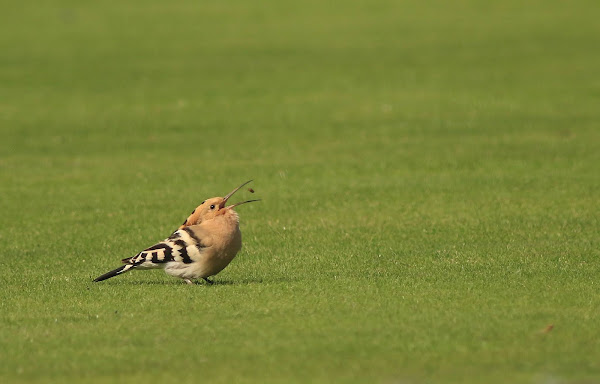
Hoopoe, Flamborough - one of various scarcities that spiced up our Spring Discovery Days 

We enjoyed great birding experiences, from various common migrants, to close-up breeding seabirds and over-shooting scarcities and (whisper it) often pleasant weather, and they're happily now a bolt-on part of the guiding calendar going forwards (and are available here should you wish to join me this spring!). For various reasons (not least increased demand), Rich and I rarely get to co-guide these days, and so it was pleasure to do so for a YCN 'Best of Yorkshire' residential group at the end of May, incorporating many great birds and locations (more here).
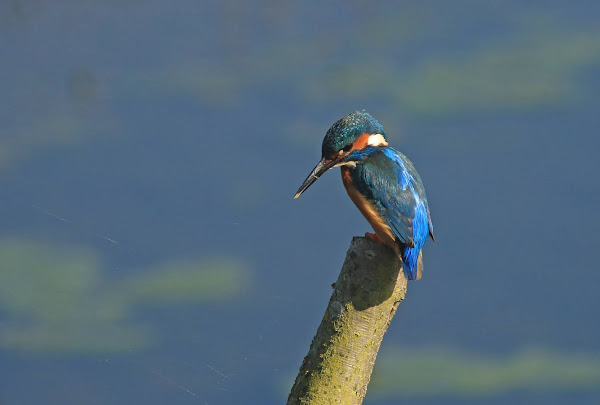
Kingfisher, Tophill Low on our YCN 'Best Of' break

Male Western Subalpine/Moltoni's Warbler, Flamborough, 2nd June 

Somewhere in there I managed to fit in some recreational birding, too - and despite the often unhelpful winds and conditions, there were plenty of rewards. As usual, this involved anywhere along the coast within a half hour or so of my base here in Filey; the latter, being the most local of my local patches, was often involved, but regular sessions at Flamborough, Buckton and elsewhere were again the norm.

Early June was, as is so often the case these days, the peak time for rare spring overshoots - and I was fortunate to find a Subalpine Warbler (Western/Moltoni's), a Rosy Starling and a Bee-eater at Flamborough within 24 hours - the latter two within ninety seconds... 


 ... while my nocturnal migration recording (nocmig) at Filey and Flamborough continued to produce scarctities and rarities I couldn't have dreamed of when embarking on this enchanting branch of migration study last year. I'll be addressing 2021's nocmig in more detail in a dedicated post shortly, but, after Stone-curlew and Bittern at on my Filey and Flamborough recorders respectively in the early throes of migration, I could hardly leave out mention here of even more jaw-dropping rewards in the spring proper....


...which included no fewer than three more Bitterns - over Flamborough village on the nights of 23rd and 29th April respectively, and one over my Filey North Cliff recorder on 13th May, bringing the spring total to four... for a barely annual species at either site, amazing and illuminating. But it was another call on that Midas-touched 13th May Filey recording that (when extensively researched and confirmed) really stoppped us in our tracks - an American Golden Plover, the first for Filey. 

But nocmig headf**ks weren't quite over yet. With migration effectively over by the last week of June, running the recorders was more out of the chance of a overshooting longshot than anything - and so it came to pass, on the night of the 23rd - a Black-crowned Night-heron (the third ever for Filey). Madness - but very, very entertaining madness nonetheless .....


Visible migration at my favoured Muston Sands viewpoint on the curve of Filey Bay was productive early in the spring, while voluntary monitoring of breeding seabirds continued for a tenth year here - 'purposeful birding' as the late great DIMW would have it. 


So, with the benefit of hindsight and the clarity of reflection, it was an absolute stormer of a spring from a local perspective - full-on, rich and varied, with a hatful of self-found gems as extra sparkle. I do enjoy putting together these summaries, sometimes......

Do I mention how the period ended? Or do I save it for the next summary, covering July, August and September? Here's a clue, anyway.....  

Thursday, December 23, 2021

Review Of The Year, 2021 - Part One

Not what you expect when you nip out to pick up your recorder... White-billed Diver, Filey, March 

So how was it for you? Dispiritingly apocalyptic again, except minus the novelty value this time? Same here.... But this isn't the place for adding another series of doom-scroll strokes to your chosen device; instead, it's a place to celebrate the joys of birds and wildlife, from a personal perspective, throughout 2021 - and, plague notwithstanding, there's been a lot to celebrate over the last twelve months.
A local Peregrine enjoying the winter sunshine 

While the beginning of the year was indeed unavoidably under the shadow of the pandemic and its repercussions, it was again a time to feel lucky; lucky to live here, with access to so many birding and nature opportunities on my doorstep and beyond, and lucky that I could continue working in the field, with all my ornithological surveys being lone and remote.
Pink-footed Geese on the Humber - more post-apocalypic visions here 

Ongoing surveys continued on both sides of the Humber and at various sites, and in the evenings, giving plenty of talks wasn't a problem either, with technology as it is; not quite the same as the personal connection of an in-person presentation, but with the silver lining of delivering them with a nice glass of single malt from comfort of my study. All very civilised.
Flurries of Avocets on the south bank of the Humber, March - more on the Humber surveys here 

Local birding here in Filey was entertaining, with the regular species and usual suspects as appreciated as ever - be they Purple Sandpipers and other waders on the Brigg, Great Northern Divers and other wave-dwellers just offshore, or Snow Buntings up on Carr Naze (fortunately a small flock of the latter stuck around over midwinter this year:)

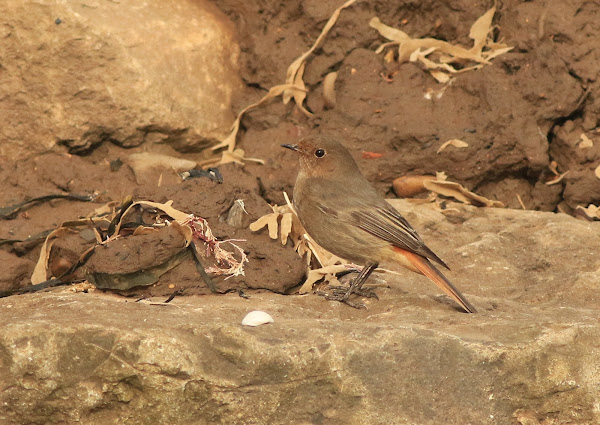
As always, the darkest days delivered a few less predictable treats locally, too, with a wintering Black Redstart in the bay corner, brief visitations from a Slavonian Grebe, Grey Phalarope, Black-throated Divers, a wonderfully tame Little Gull (also in the bay corner, below) and - with a period of particularly bone-chilling and harsh conditions in early February - an impressive influx of Woodcocks.

Sunny days toward the end of February means heading into the forests with the old man to enjoy displaying Goshawks, and this year was no exception; such a treat to have them less than half an hour from the house. Somewhat less expected at the end of February (that's a contender for understatement of the year) - or indeed, at any time of year here up here - is the unmistakable long-call of a Stone-curlew; but that's exactly what my nocturnal recorder picked up on North Cliff on 25th. As an early reward for my local nocmig efforts, it was magical, and surely would be hard to beat as the year spring wore on....


It was while retrieving my recorder a few weeks later - and wandering up onto the cliff for a quick scan, as I often do - that one of the diurnal birds of the year presented itself: a stunning, banana-conked White-billed Diver. Not disappearing distantly over the horizon, but swimming around innocently on the sea below me..... an unforgettable highlight of the birding year, especially when considering Black-throated, Great Northern and Red-throated were also present - a unique full house!
Wintering Black Redstart in the bay corner 

So, on reflection, a productive and entertainingly birdy first part of the year - but it was about to get much better....
Barn Owl, Filey, February 

Part Two to follow soon