Champions of the Flyway!

Sunday, January 10, 2021

Filey Peregrine, Jan 2020

A walk with the Mrs along the clifftop here in Filey yesterday, cold and crisp with a winter sun setting - with another local out on manoeuvres....


Saturday, January 9, 2021

2020 - The Year In Nocmig (Part Two)

 Part One (April to July) can be found here

Russian White-fronted Geese had nocmig starring roles at Filey and Flamborough

So, after a wonderfully productive first 'half' to the nocturnal migration recording (nocmig) year, for my first autumn, I had three recorders rolling (to varying degrees) - with more success and enjoyment than I could've hoped for as August began: 

Filey Town - the original, jammed in the study window and pointing out into the back alley in the middle of town;

Filey North Cliff - 1.3km north of the above, near the clifftop, in a small plastic bucket;

Flamborough village - a recorder in a plant pot in a village garden.

Here's a succinct run-down of each location's monthly highlights, with live links to more detailed summaries under the title of each. 


August - Filey North Cliff

A full summary of August's results can be found here

Highlights - exceptional shorebird (wader) migration, for both quality and quantity - sustained and often heavy passage with a monthly tally of 17 species (!), which included: both Bar- and Black-tailed Godwits, multiple Green and Common Sandpipers, good numbers of Whimbrel, Sanderling, Dunlin, Curlew, Turnstone and Ringed Plovers, and impressive movements of Oystercatchers (with e.g. at least 68 on 9th). Also Arctic, Common and Sandwich Terns, and a surprise Short-eared Owl (tying in with a diurnal mini-influx) on 16th. 

Most abundant - Oystercatcher (156), Curlew (42), Sanderling & Dunlin (both 27), Ringed Plover (16)

Most regularly recorded - Oystercatcher (81%), Curlew (73%), Ringed Plover & Dunlin (both 38%)

17 species of waders were registered by the North Cliff recorder in Aug, including Green Sandpipers


August - Filey Town

Highlights - active from the 14th, and within the gull sono-barcode, a Tree Pipit (29th), ten wader species including Turnstone, Knot, three Common Sandpipers and 13 Redshank, plus Sandwich and Common Terns were all bonuses under the challenging circumstances!

Most abundant - Dunlin (18%), Redshank (13), Oystercatcher (8)

Most regularly recorded - Dunlin (38%), Redshank (31%), Oystercatcher (22%)


August - Flamborough 

A full summary of August's results can be found here

Highlights - active from the 10th, and as with the Filey North Cliff results, a fantastic month for shorebird migration... 16 wader species, including Wood Sandpiper, Sanderling, Knot, both Godwits, Grey, Little Ringed and Golden Plovers, good numbers of Ringed Plovers, Oystercatchers and Redshank, and a Tree Pipit (15th).

Most abundant - Oystercatcher (88), Redshank (64), Ringed Plover (13)

Most regularly recorded - Oystercatcher (94%), Ringed Plover (35%), Golden Plover, Dunlin and Redshank (24%)

Wood Sandpiper - a single nocmig record last Autumn, from Flamborough in August


September - Filey North Cliff

A full summary of September's Filey results can be found here

Highlights - Little Egret (16th), a good cast of waders (but in much smaller numbers than the previous month), and – particularly towards the end of the month - passerines: Skylarks, Song Thrushes, Robins, Tree Pipit, Goldcrest (30th) and Yellow-browed Warbler (29th)!

Most abundant - Curlew (21), Grey Heron (16), Dunlin & Pink-footed Goose (11)

Most regularly recorded - Curlew (45%), Skylark & Oystercatcher (32%), Black-headed Gull (27%)


GOLD!


September - Filey Town

Highlights - Still much reduced coverage due to the gull colony, but a steady improvement from mid-month, with up half each night's recording mostly checkable by the end of Sep. A selection of waders (in small numbers), passerines including Redwings, Robins and Meadow Pipits, and another low fly-by from a Barn Owl (an odd but increasingly not-unusual route to take!).

Most abundant - Oystercatcher (12), Dunlin (11)

Most regularly recorded - Oystercatcher (32%); Dunlin, Snipe, Great Black-backed & Black-headed Gulls, and Greylag Goose (all 11%)

Redwings began arriving overnight in September, and would play a huge nocmig role all from then on


September - Flamborough

Highlights - Passerines including Song Thrushes, Meadow Pipits, Robins and Redwings (the latter with an early notable arrival of 68 on 27th); pulses of wader passage, including movements of Knot and Dunlin mid-month.

Most abundant - Redwing (73), Dunlin (15), Knot (12)

Most regularly recorded - Robin (24%), Sandwich Tern, Redwing, Song Thrush (all 18%)


Dunlins - an abundant and regular presence on autumn nocmig recordings


October - Filey Town

A full summary of October's Filey results can be found here

Highlights - A Dotterel on 7th (a local rarity, only recorded every few years diurnally in Filey); good numbers of Pink-feet, and a large flock of Whooper Swans on 22nd; a wide variety of late autumn passerines, including Bramblings, Robins, Meadow Pipits and Chaffinches; memorable, record-breaking thrush immigration, with thousands of Redwings and Blackbirds, as well as many Song Thrushes, Fieldfares and three Ring Ouzels (see totals below).

Most abundant - Redwing (4,219), Blackbird (1,175), Pink-footed Goose (82), Fieldfare (80)

Most regularly recorded - Redwing (69%), Blackbird (54%), Song Thrush (31%), Fieldfare (23%)

One of the standout highlights of autumn's nocmig - a Dotterel over the back alley!


October - Filey North Cliff

Highlights - several notable thrush nights, with e.g. 1,553 Redwings on 13th; a wide variety of passerines, including 12 Robins, a late Tree Pipit (5th), two Dunnocks, Lesser Redpoll, Reed Bunting and Chaffinch; small numbers of waders & Pink-feet, and an interaction between (local) Little Owls (a rare bird in the area).

Most abundant - Redwing (2,335), Blackbird (434), Pink-footed Goose (55)

Most regularly recorded - Redwing (64%), Robin and Song Thrush (both 57%)

How many thousands of Pink-feet passed over my recorders this autumn? How long's a piece of string?


October – Flamborough village

Highlights - good movements of Pink-feet, Whooper Swans, late season shorebirds (Snipe, Knot, many Dunlins), passerines including a Goldcrest (23rd), heavy thrush arrivals.

Most abundant - Redwing (881), Pink-footed Goose (215), Blackbird (213)

Most regularly recorded - Redwing (73%), Blackbird (50%), Song Thrush (35%)

Whooper Swans - much hoped-for, and happily much-recorded, throughout the autumn


November - Filey Town

A full summary of November's Filey results can be found here

Highlights - An exceptional influx of winter geese, with six species recorded – most notably, multiple Bean Geese and Barnacle Geese, several flocks of Russian White-fronted Geese, and numerous, often large skeins of Pink-footed Geese; lots of shorebird activity, with e.g. six Grey Plovers, big numbers of Dunlins and Golden Plovers, plus Snipe, Lapwings and more; Common Scoters, rails, gulls, more Whooper Swans and wildfowl (particularly Wigeon); record-breaking influxes of Blackbirds, as well as big numbers of other thrushes... what a month!

Most abundant - Blackbird (2,932), Redwing (1,682), Pink-footed Goose (1017), Dunlin (81)

Most regularly recorded - Redwing (96%), Blackbird (62%), Song Thrush (46%)


Snipe - a regular registration in late autumn


November – Filey North Cliff

Highlights - lots of action (but interestingly, not nearly as much as the town recorder) – Russian White-fronted Geese, Whooper Swans, lots of Pink-feet, notable thrush influxes, other passerines including Robins and six Bramblings.

Most abundant - Pink-footed Goose (621), Blackbird (565), Starling (200), Redwing (198)

Most regularly recorded - Blackbird (100%), Redwing (89%), Pink-footed Goose (67%)

The diagnostic wheeze of Bramblings was a welcome treat on late autumn recordings


November - Flamborough

Highlights - Lapland Bunting (3rd); Russian White-fronted Geese, lots of Whooper Swans and Pink-feet; notable thrush influxes; waders including Bar-tailed Godwit and Knot;

Most abundant - Redwing (763), Blackbird (554), Pink-footed Goose (70)

Most regularly recorded - Redwing (75%), Blackbird (60%), Robin (25%)

Lapland Bunting - another highlight from Flamborough nocmig this autumn


December – Filey Town

Highlights – The Goosefest continued... Yet more White-fronted Geese, Barnacle Geese, huge movements of Pink-footed Geese; small numbers of waders and wildfowl and small but regular pushes of thrushes.

Most abundant - Redwing (763), Blackbird (554), Pink-footed Goose (70)

Most regularly recorded - Redwing (75%), Blackbird (60%), Robin (25%)

Very little recording took place in December at North Cliff & Flamborough due weather / practical reasons, with the intention being to resume activities there in early spring....

Turnstones - recorded with surprising regularity, and at all three sites this autumn


If you're interested in nocmig, but unsure as to how / where to start, the following might be useful:

In September, I was interviewed by Nate Swick for the American Birding Podcast about my new-to-nocmig adventures - you can listen to it here: ABA nocmig podcast

In October, I gave an online talk about my (beginner's) journey so far for our virtual Migweek, which can be watched here: It's a Hard Nocmig - Migweek talk 

Great resources online include the Nocmig website and the Sound Approach website.

Finally - big thanks to my friends in our local nocmig Whatsapp group, particularly Will and Dan, for their ongoing and hugely enjoyable team efforts, and also to the experts who have helped so far - with a very special mention and huge thanks Magnus (Robb), whose positive and enthusiastic support and expertise have made it a much more educational and enjoyable ride thus far.

Last but not least, Yorkshire Coast Nature - who very generously donated three of the four recorders I use - and who are clearly the greatest wildlife tourism company in the world (trust me....)

Here's to 2021!

Saturday, January 2, 2021

2020 - The Year In Nocmig (Part One)

Common Scoter  - the species that kickstarted my nocmig here in the town back in April 

Well, that was fun. Nocturnal migration recording - Nocmig - has been a wonderful part of 2020, in many different ways: as a distraction in trying times, as a (steep) learning curve for new birding skills and knowledge, as a new method of understanding and appreciating local bird migration, as a valuable data-gathering exercise, and ultimately, as a glittery little mystery treasure trove to open every morning....

(Headphones recommended for playing the following audio clips)


At the end of March, with an indefinite lockdown beginning, birding opportunities narrowing, and crucially, Common Scoters audibly beeping outide my bathroom window in the night sky, the reasons for not trying it previously - a lack of garden, a lack of time, a lack of a quiet enough recording location, and a lack of professional gear - were suddenly outweighed by a 'screw it, it's got to be worth a shot' approach that turned out to be one of the better turning points of Spring 2020.


Common Sandpiper - a regular spring migrant over the house

I've written (and spoken) widely about my novice experiences in nocmig here and elsewhere over recent months, and rather than rehashing existing content, this annual summary will be a little more succinct, with the option of reading about each month in more depth via links below each header. 

As regular readers will know, for the first few months it was all about the recorder jammed into the gap in my study window and pointed out into the alley here in downtown Filey; by July, I'd expanded my set-up by running a second recorder regularly up on the North Cliff here in Filey, about 1.3km to the north of the house. (By August, I had three on the go simultaneously, as described in part two, to follow soon....)

April 
Full summary of Filey Town results here

Highlights - Hundreds of Common Scoters - the species that kick-started it all, and that gave the impetus to persist; nine wader species, including four Little Ringed Plovers, the first Greenshank and Grey Plover; two Blackcaps (at the time, an unexpected thrill over these urban rooftops!); lots of wildfowl including Gadwall, Wigeon and Pochard; numerous rails (especially Moorhens and Coots); lots of returning Scandinavian thrushes, including three figures of Redwings.

Most abundant - Common Scoters (288), Redwing (168), Oystercatcher (38), Common Sandpiper (13) 

Most regularly recorded - Redwing (57%), Common Scoter (43%), Oystercatcher (37%), Blackbird & Moorhen (both 30%) 
May
Full summary of Filey Town results here

Highlights - Two Quails (10th & 25th); a wider variety of waders, including the first Sanderlings, Knot and Turnstones; the first terns (Sandwich and Arctic); long-distance passerines, including two Lesser Whitethroats, Spotted Flycatcher and Yellow Wagtail; first (wholly unexpected) record of a Barn Owl short-cutting through the heart of town!

Most abundant - Oystercatcher (59), Moorhen (24), Whimbrel (14), Dunlin (12) 
Most regularly recorded - Oystercatcher (68%), Moorhen (48%), Little Ringed Plover & Grey Heron (both 23%)


June
Full summary of Filey Town here
 
Highlights - Plenty of rails (numerous Moorhens, plus Water Rails and Coot), Little Grebes, another Spotted Flycatcher, (presumably returning) Common Scoter (but the Herring Gull colony noise was increasingly overwhelming....)

Most abundant - Moorhen (30), Oystercatcher (19), Grey Heron (11), Curlew (8)
Most regularly recorded - Moorhen (40%), Oystercatcher (37%), Grey Heron (27%), Curlew (13%)


July 
Full summary of Filey North Cliff and Town here 

Highlights - Recording began from the 10th on the North Cliff here in Filey, which was instantly productive and hugely varied: highlights included a Bittern (23rd), twelve wader species (including four Little Ringed Plovers, lots of Curlew and Whimbrel, Turnstones, Knot, Grey and Golden Plovers), three Water Rails, Common Scoters and much more - a wealth of variety and abundance! 

The Filey Town recorder was temporarily mothballed on 12th due to the almost total audio wipeout from the Herring Gull colony, but still clocked plenty of Curlews, Moorhens and a few other species before then. 

Most abundant (North Cliff) - Curlew (35), Dunlin (21), Oystercatcher (20), Redshank (13)

Most regularly recorded (North Cliff) - Curlew & Oystercatcher (both 60%), Dunlin (40%), Redshank (35%)


A hugely entertaining first 'half' of the year, and autumn would prove to be arguably even more surprising and productive... 

Part Two (covering August to December) follows soon 

The First Snows of 2021

I know, I know, more Snow Buntings... along with Purple Sandpipers, there's probably more photos of them on this blog than any other species - but I have a huge weakness for them, and have had since I was a kid, and the fact that I get to see them so regularly and at such close quarters only adds to the love affair.
So here's the same three I had the pleasure of sitting down with at the end of the day the day before yesterday, this time on the other side of the New Year.

Thursday, December 31, 2020

The Last Snows of 2020

A last walk of 2020 on Carr Naze here in Filey, the last bright rays of winter sunshine, and the last birds to appear - three beautiful Snow Buntings, ultra-tame, charismatic, and a perfect bookend to the year. Hope it's a better one for you, wherever you are.

Wednesday, December 30, 2020

Review Of The Year, 2020 - Part Three

Summer plumage Red Knot, back from the Arctic in a flash of rust

Part one is here, and part two here - part four to follow soon 

So despite everything, spring was, from a birding perspective, actually really productive, enjoyable and wonderfully theraputic - but with such a rip-roaring finale at the end of June, it was only to be expected that July would, as usual, see a natural calming of proceedings. Right?
That cat hair on your screen towards the lower right of the photo has a wingspan of over two metres.... 

Wrong! When news broke of a (the) Black-browed Albatross having returned to Bempton Cliffs on the afternoon of the 2nd, I was at my desk, working; thirty seconds later I was in the car, and a few minutes after that, legging it along Carr Naze here in Filey. Not Bempton, like most others, but - after catching up with this very bird there a few years ago - I instead decided to gamble on the (hugely) longer odds of connecting with it on the most local of my local patches...
A big risk, but I stuck to my guns, and long story short, after a nerve-wracking, stay-on-target 90 minutes, Ana and I had memorable views as it sailed lazily across the bay, past the Brigg and out to sea; I even managed some shooting-at-nothing record shots, which are simultaneously the very worst and best pictures I think I've ever published here or elsewhere... For the full, over-excited story from at the time, see here and here.


 Bottlenose Dolphins bow-riding with us (stick with it to the end)... 

Our Yorkshire Coast Nature Seabird and Whale Adventures have grown increasingly popular in recent years, and this season - no doubt through a combination of lockdown lifting, lack of international travel options, and a general hunger for life-affirming nature fixes - they (and all our other local wildlife tours) went through the roof, to the point where we could've booked them all many times over.


  ... and Minke Whales provoking beautiful reactions 

And of course, the wildlife didn't disappoint. I had the pleasure of leading the many of pelagics this year for many lovely clients, and we'd the company of Bottlenose Dolphins and Harbour Porpoises on various occasions and a wide variety of seabirds, many offering close-up photo opps for our clients; but to be honest, it's the whales that usually steal the show, and the Minkes again performed admirably on the majority of our trips.
Caspian Gull, Manx and Sooty Shearwaters - a few of the many seabird highlights on our YCN trips this year
Bottlenose Dolphins in Filey Bay - a regular sight from dry land in the summer months 

And as July wore on, so the seasonal opportunities to enjoy cetaceans from dry land increased - Minkes, Harbour Porpoises and (especially) Bottlenose Dolphins were on view from the shoreline here in Filey (above and below), with the latter species particularly prevalent, and increasing in numbers and sightings every year.
Basking Shark in the bay - a very rare visitor that unfortunately didn't make it any further 

The lifting of restrictions inevitably also saw an unprecedented flood of visitors to the coast, however, and with the pleasant weather, Filey was (understandably) swamped; so we did what we usually do in the height of summer - while others head to the coast, we head inland, especially to the forests.
We have the luxury of beautiful, wildlife-rich and effectively deserted 'secret' spots within a half hour's drive, and we made the most of them, wiling away many long summer afternoons with Goshawks, Dippers, Redstarts, Honey-buzzards, Kingfishers, Crossbills (above and below) and more for company. Spoiled, I know.
Early autumn migration moves up a gear in mid-July, particularly where shorebirds and concerned, and as usual I spent time down on the Brigg and especially at local wetlands (often during / after favourable conditions, notably storms). There was plenty of action to enjoy, including a memorable flock of 63 summer plumage Black-tailed Godwits that dropped in in front of me at the Dams (a local record) and a smart Temminck's Stint at East Lea (I seem to get lucky finding this species locally, with a handful at both Filey and Flamborough in recent years).
Temminck's Stint at East Lea
Dunlin, Ruff and Redshank at the Dams


A few of the Black-tailed Godwits that illuminated the Dams
Down on the Brigg and the unpredictable, transient joy of tern congregations provided some fine sessions, notably including three Black Terns among hundreds of congeners in mid-August -
- which is when the first real waves of long-distance passerine migrants are hoped for, at least with favourable weather conditions. Despite the crowds (and also lack of access to quieter hotspots), classic species including Willow Warblers, Whinchats and Pied Flycatchers were all on the move:

September became increasingly busy, with the resumption of our Humber Bird Surveys, the continuation of our YCN Pelagics and the beginning of my YCN Autumn Migration Specials - the latter all happily booked up well in advance and spent guiding small teams of clients around the best of the day's migration action on the coast. Flamborough was, as ever, particularly productive, and we had some excellent days in the field there and elsewhere (see, for example, here).  

Red-backed Shrike - one of many highlights on our Autumn Migration Specials

Long-planned trips further afield were cancelled one by one, and so much-needed five-day getaway with the Mrs to North Wales - specifically Anglesey, and a static caravan air BnB in the middle of a field - in September was wonderful. We spent much of it exploring the hidden corners of the island, as well as two leisurely, long, oooh-and-aaah soundtracked drives through Snowdonia and a sunny day at Portmeirion. Birding was largely as collateral, but did include many Choughs and Ravens, plenty of Greenland Wheatears and a smart adult Rosy Starling:
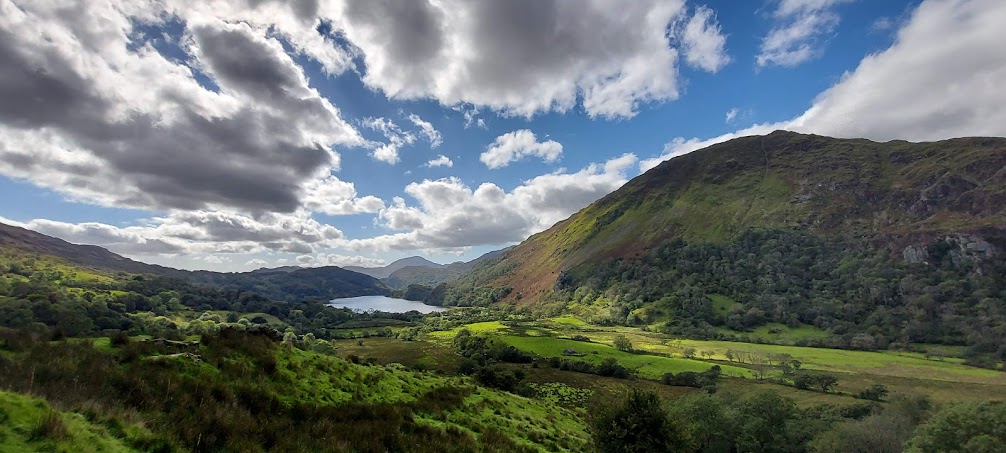
Snowdonia - yep, it really is this beautiful.... 

Looking back over this period now - ie July, August and September - it conjures many memories of relief and reprieve (however temporary), and of just being grateful to work, bird and play in a manner that looked unlikely even a month or so previously; sacrifices were relatively few and manageable, and seem increasingly irrelevent when reviewing what was a great three months of keeping it local, enjoying good weather, spending a lot of time doing things I love with good people, and jumping in the sea at any given opportunity....
Midsummer at Bempton - when it's just you, the Mrs, and half a million seabirds....